
Women’s Football Betting in the UK: WSL Markets, Coverage and Where to Find Value
 Available in US

Three years ago, I couldn’t find a single UK bookmaker offering more than a handful of markets on a Women’s Super League match. Today, a headline WSL fixture carries 40-80 markets across the major operators, in-play betting is available on most televised matches, and the outright title market runs through the full season. The growth has been rapid, the pricing is immature, and for bettors willing to invest the analytical work, women’s football offers edges that disappeared from the men’s game years ago.
Market Coverage on the WSL and Women’s Champions League
The Women’s Super League is the best-covered women’s domestic league in UK betting. All major operators offer match-result, both teams to score, over/under goals and correct score markets on every fixture. The top-tier matches — Chelsea vs Arsenal, Manchester City vs Manchester United — attract deeper coverage including player props, corner markets and half-time/full-time.
Coverage drops sharply beyond the WSL. The Women’s Championship and lower divisions receive minimal or no betting coverage from most operators. International fixtures — including the Women’s World Cup and European Championship — attract Premier League-level market depth during tournament periods, then disappear outside of them. The Women’s Champions League sits in between: group-stage matches involving English clubs are reasonably well covered, but fixtures between continental sides often receive bare-minimum market availability.

The UK online sports betting market generated $8,284 million in revenue during 2025, with sports betting at 57.1% of the total. Women’s football represents a tiny fraction of that figure — but it’s the fastest-growing segment in terms of year-on-year handle growth, driven by increased media coverage, broadcast deals and a generational shift in audience demographics. The market is small but expanding, and early engagement gives bettors an analytical head start that will be harder to build once the market matures.
Why WSL Odds Are Less Efficient Than Men’s Football
I ran a comparison last season: I built a basic Poisson model for both the Premier League and the WSL, using the same methodology and publicly available xG data. My closing line value in the Premier League averaged +0.8% over 300 bets. In the WSL, using the same approach, my CLV averaged +4.2% over 120 bets. The difference isn’t because women’s football is easier to predict — it’s because the market is less efficient.

Less liquidity means less sharp money correcting the prices. The bookmaker’s WSL trading desk is thinner than its Premier League equivalent, and the models used to set prices rely on smaller datasets with more noise. Squad turnover in the WSL is higher, managerial changes are more frequent, and the gap between the top three or four clubs and the rest is wider than in the men’s top flight — all factors that create pricing inconsistencies that a well-informed bettor can exploit.
Football generated £1.3 billion in remote betting GGY in the UK to March 2025. The share attributable to women’s football is growing but still small enough that operator investment in pricing accuracy lags behind. This is the window. As the market grows and more data becomes available, the value betting opportunities will compress. The analytical edge available today won’t last forever.
Building a WSL Betting Model From Publicly Available Data
The barrier to entry for WSL modelling is lower than most bettors assume. Expected goals data for the WSL is available from the same providers that cover the men’s game, and the smaller number of teams (12 in the WSL versus 20 in the Premier League) means the dataset is more manageable. I run a straightforward Poisson model using team-level xG for and against, adjusted for home advantage, and compare the output to bookmaker prices on match result, over/under goals and BTTS.
The small sample size is the primary challenge. With each WSL team playing 22 league matches per season, the data refreshes slowly and early-season estimates carry wide confidence intervals. I supplement league data with Women’s Champions League and international performances where players overlap, which partially addresses the sample problem. The key insight is that imperfect data in an inefficient market still generates more edge than perfect data in an efficient one. My WSL model is cruder than my Premier League model, but it produces better returns because the competition for pricing accuracy is so much thinner.

Tactical and Statistical Differences That Affect Betting
Goal-scoring patterns in the WSL differ from the Premier League in ways that matter for over/under and BTTS markets. Average goals per match in the WSL are higher — typically 2.8-3.2 compared to the Premier League’s 2.6-2.8. The variance between teams is also wider: matches involving the top sides against lower-table opponents frequently produce four or five-goal margins, while mid-table clashes can be tight and low-scoring.
Defensive organisation is generally less consistent, which inflates BTTS rates relative to the men’s game. Set-piece vulnerability is another factor: headed goals from corners and free kicks account for a higher proportion of total goals, making set-piece analysis more predictive of match outcomes. If you track corners won and headed goal rates for each WSL side, you have a data edge that most casual bettors — and some operator pricing models — don’t incorporate.
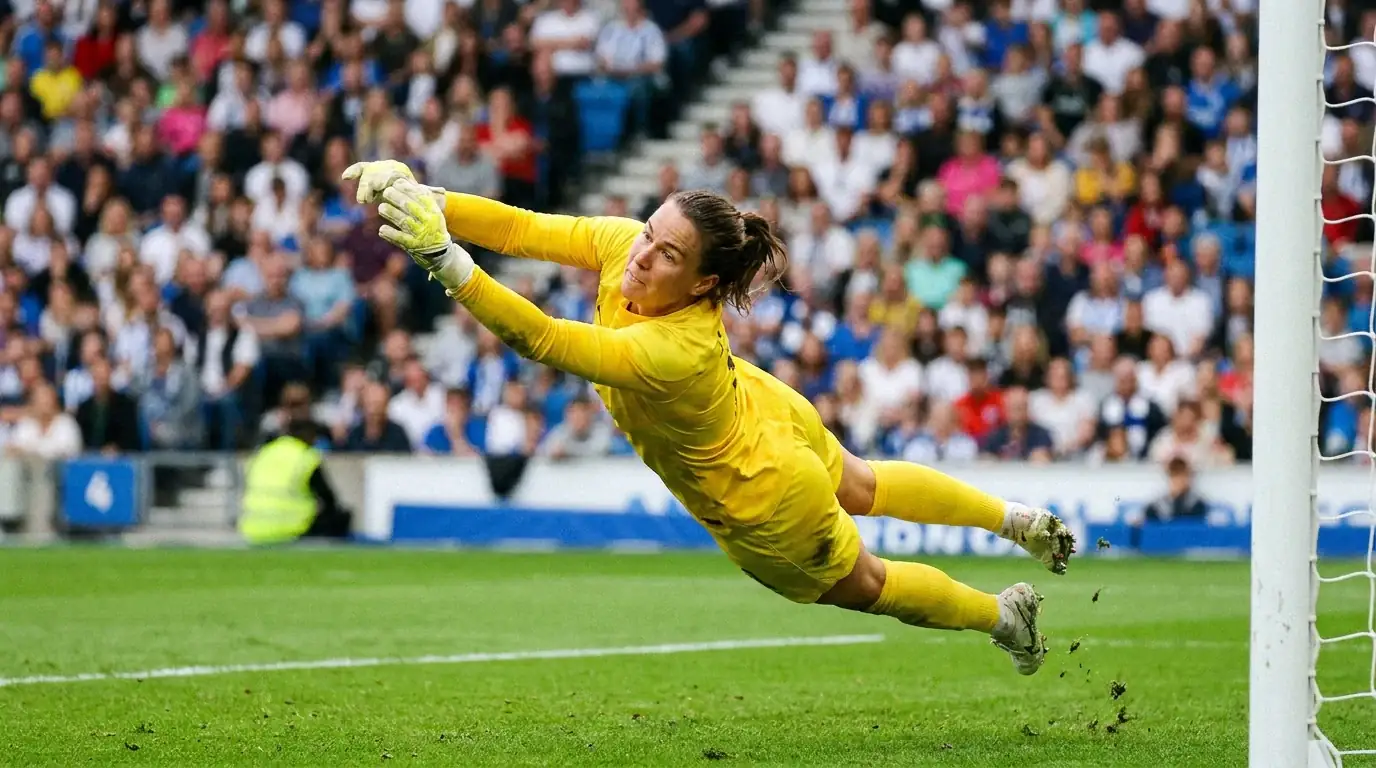
Goalkeeper performance is another area where WSL data diverges from the men’s game in betting-relevant ways. Save percentages and distribution quality vary more widely between WSL goalkeepers than between their Premier League counterparts, and a single goalkeeper change — through injury, transfer or rotation — can shift a team’s defensive profile meaningfully. Tracking goalkeeper xG prevented (goals saved above expectation) gives a clearer picture of defensive resilience than clean sheet records alone, and this metric is increasingly available for the WSL through public data providers.

The analytical infrastructure around women’s football is expanding rapidly. xG data for the WSL is now publicly available from multiple providers, match reports are detailed, and tactical analysis content is growing. The tools exist to build a credible model. What’s missing is the density of sharp bettors who would otherwise correct the market’s pricing errors. That absence is your opportunity — and it’s the reason women’s football betting deserves a serious place in any UK bettor’s portfolio.
Do all UK bookmakers offer betting on the Women’s Super League?
All major UK bookmakers offer markets on WSL fixtures, including match result, over/under goals and both teams to score. Market depth varies by operator and by fixture — headline matches between top clubs attract 40-80 markets, while lower-profile fixtures may have only core markets. In-play betting is available on most televised WSL matches.
Are women’s football betting odds less accurate than men’s football?
Generally, yes. Women’s football markets attract less trading volume and less sharp money, meaning prices are corrected less efficiently. Bookmaker pricing models also rely on smaller datasets with higher variance. This creates wider margins but also more frequent mispricing, offering an analytical edge for bettors who invest in research and modelling.
Written by the editors at Football Betting Sites.