Live Football Betting in the UK: How In-Play Odds Move and When to Strike
 Available in US
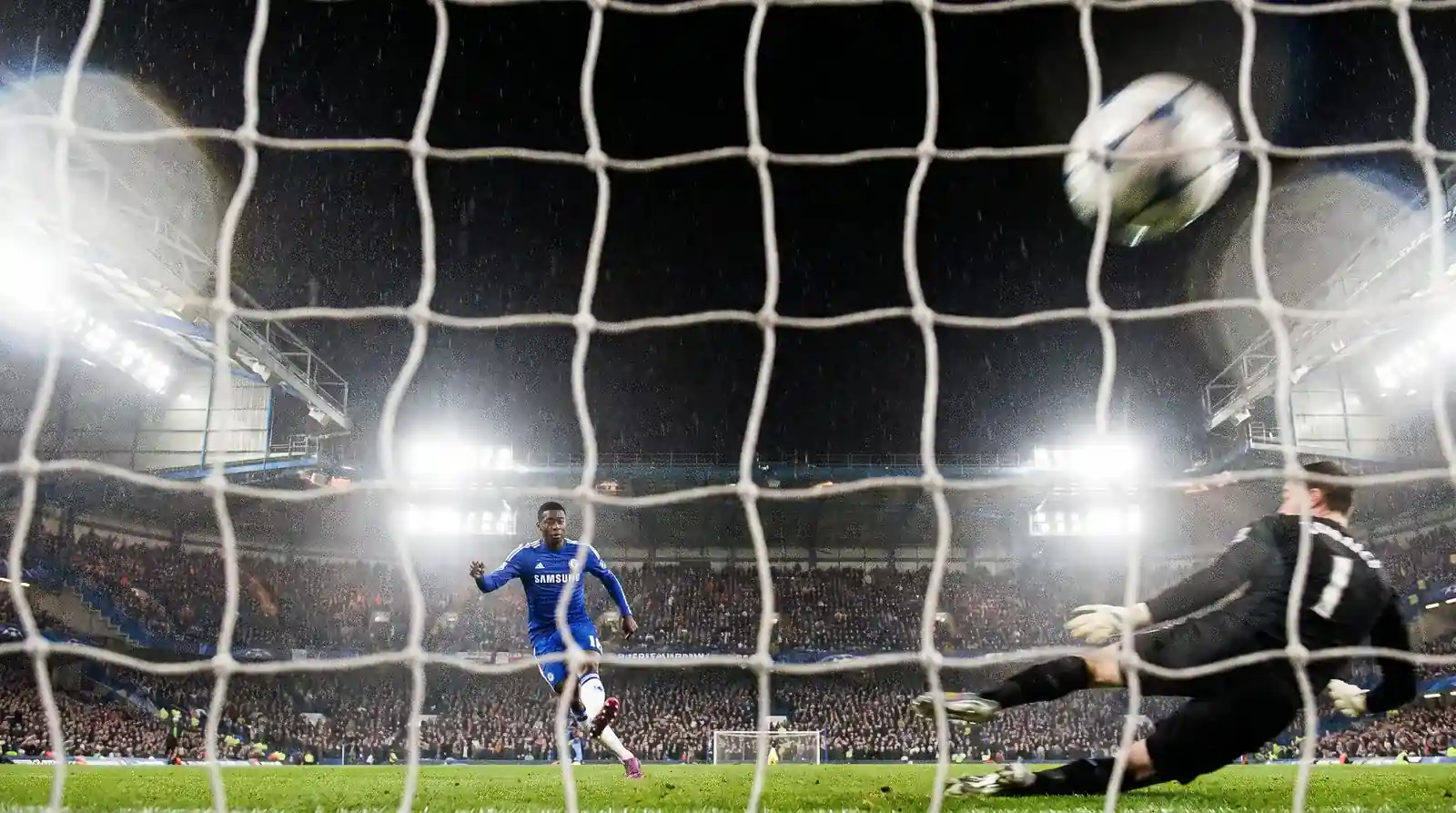
The first time I placed a live football bet, I lost money because I hesitated for eight seconds. The match was deep into the second half, a corner was about to be taken, and the price on “next goal home” was drifting upward. I weighed the decision, tapped confirm — and the odds had already moved. The price I wanted was gone. Eight seconds is a lifetime in the in-play market, and that lesson has shaped every live bet I have placed since.
Live football betting is the fastest-growing segment of the UK market. Five per cent of the entire UK adult population — and 9 per cent of men — actively bet on live football, making it the single most popular format of in-play wagering. Roughly 290 million online bets on real events are placed in the UK every month, and the in-play share of that total has grown year on year as platforms invest in streaming, faster odds engines and mobile-first interfaces.
This guide covers how in-play odds are generated and updated, why latency determines who gets value and who pays above the market, and the timing patterns I have identified across thousands of Premier League in-play markets over the past several seasons. Live betting rewards preparation and punishes impulse — everything here is designed to shift you from one category to the other.
How In-Play Football Odds Are Calculated and Updated
Pre-match odds are set by traders who build a market over hours or days, factoring in team news, historical data, public money and sharp-bettor signals. In-play odds are set by algorithms that react to events in real time. The distinction is not just speed — it is a fundamentally different pricing regime, and understanding that regime is the first step toward betting into it profitably.
The in-play engine starts with the pre-match price and adjusts it continuously based on a set of inputs: elapsed time, current score, red cards, corners, possession, expected goals and — on more sophisticated platforms — positional tracking data. Each input has a weight, and the weights shift depending on match state. Early in the first half, elapsed time has a small influence and current score has a large one. In the final ten minutes, both have extreme influence, which is why odds move violently after a late goal.
The critical detail most punters miss is that the algorithm does not “know” what is happening on the pitch in the way a human trader does. It responds to data feeds — specifically, to events coded by data scouts watching the match. A goal is coded when the ball crosses the line, but the coding itself takes 1 to 3 seconds to transmit, and the algorithm takes another 0.5 to 2 seconds to recalculate and publish new odds. That delay creates a window where the market is technically stale — the old price is still showing even though the match state has changed. Professional bettors exploit this window; recreational bettors usually fall victim to it, because by the time they react to what they see on screen, the algorithm has already adjusted.

The overround on in-play markets is generally wider than pre-match. Where a pre-match Premier League 1X2 might carry a 105 per cent book, the in-play version of the same market can run at 108 to 115 per cent, depending on match state and platform. The bookmaker charges more for the real-time service, and the volatility gives them cover to build in a larger cushion. You are paying for immediacy, and the premium is not trivial.
Suspensions add another layer. During key events — a goal, a red card, a penalty — most platforms suspend the market entirely for anywhere from 10 to 45 seconds. When the market reopens, the new prices already reflect the event. This means you cannot back the goal to stand unless you placed the bet before the suspension, and by the time the market reopens, the value has already been priced in. Understanding the suspension rhythm of your preferred platform is essential: some suspend aggressively (longer windows, more triggers), while others keep markets open through marginal events like corners and substitutions, giving you more opportunities to trade.
Latency, 5G and the Seconds That Decide Value
I once tested the same live bet on two phones side by side — one on a strong Wi-Fi connection, one on a 4G signal in the same room. The Wi-Fi phone consistently loaded the updated price 1.5 to 2.5 seconds faster than the 4G phone. On a match with rapid odds movement, that gap was the difference between getting a price with value and getting a price the market had already corrected.
Latency in live betting comes from three sources: your network connection to the sportsbook server, the sportsbook’s internal processing time, and the data feed delay between the live event and the odds engine. You can only control the first. The shift to 5G has narrowed the network component significantly — peak 5G latency runs at 5 to 10 milliseconds compared to 30 to 50 milliseconds on 4G — but the sportsbook’s internal delay and the data feed lag still dominate. Even on a perfect connection, you are working with a total pipeline delay of 2 to 5 seconds between a real-world event and the odds on your screen reflecting it.
This matters because the in-play market is an information game. The punter who sees the event fastest — or, more precisely, whose bet reaches the server before the odds engine adjusts — captures the stale price. Watching the match live on a low-latency broadcast (terrestrial TV is typically 3 to 5 seconds ahead of most streaming platforms) while betting on a fast network connection compresses the information gap in your favour. Watching on a delayed stream while betting on a slow connection stretches it against you.
For the average punter, the practical implication is not to try to front-run the algorithm — that is a losing game against professional syndicates with dedicated infrastructure. Rather, it is to avoid placing bets during high-volatility moments when the pipeline delay is most likely to work against you. Bet into calm periods — the 20th minute with no goals, the 60th minute of a stalemate — when odds are stable and the latency disadvantage is irrelevant.
Live Football Streaming on UK Betting Sites
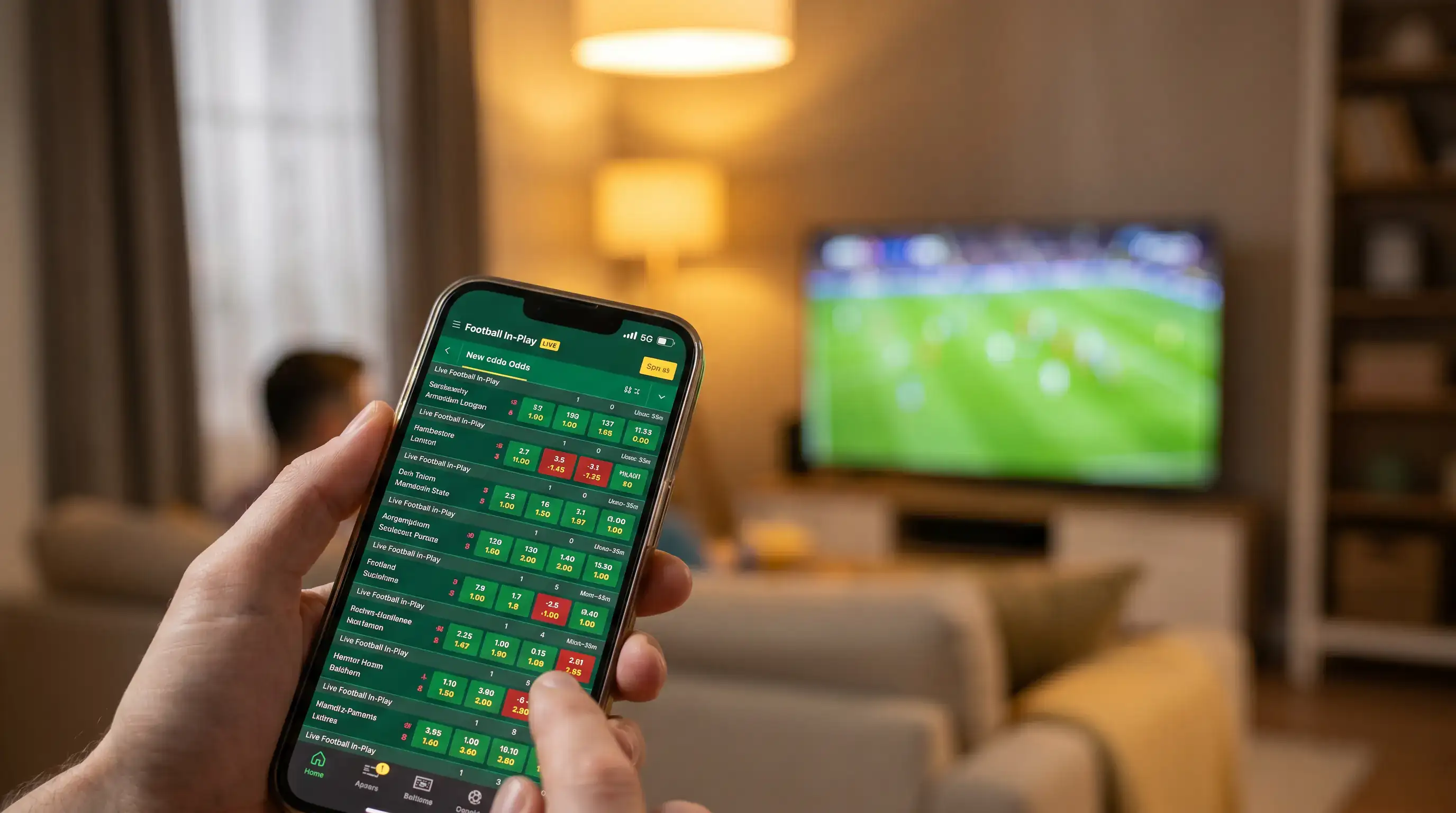
Roughly 10 per cent of the UK population actively bets on sports online, and 95 per cent of that activity happens from home. The living room is the betting shop of 2026, and live streaming is what turns a passive bet-and-wait experience into an active one. Every major UK sportsbook now offers some form of in-play football streaming, but the coverage varies dramatically — and the stream quality directly affects your ability to bet into the right moments.
Premier League matches are not available for streaming on UK sportsbooks due to broadcast rights held by Sky Sports, TNT Sports and Amazon Prime. This is the single biggest gap in the UK live betting experience: the most popular league for in-play wagering requires a separate subscription to actually watch. What you will find on sportsbook streams is extensive coverage of European leagues, Champions League qualifiers, international friendlies and lower-division English football. Some platforms also offer a pitch-tracker visualisation for matches they cannot stream — a graphical representation of play that updates every few seconds, showing ball position, possession zones and event markers.
Stream latency matters for the reasons I outlined above. Sportsbook streams typically run 3 to 8 seconds behind real time, which means the odds on your screen may already be adjusting to an event you have not yet seen on the stream. If you are watching on the sportsbook stream and betting on the same platform, you are working with a natural information disadvantage. The workaround, where available, is to watch on a faster broadcast source and bet on the sportsbook app simultaneously. Not ideal from a convenience standpoint, but materially better from a value standpoint.
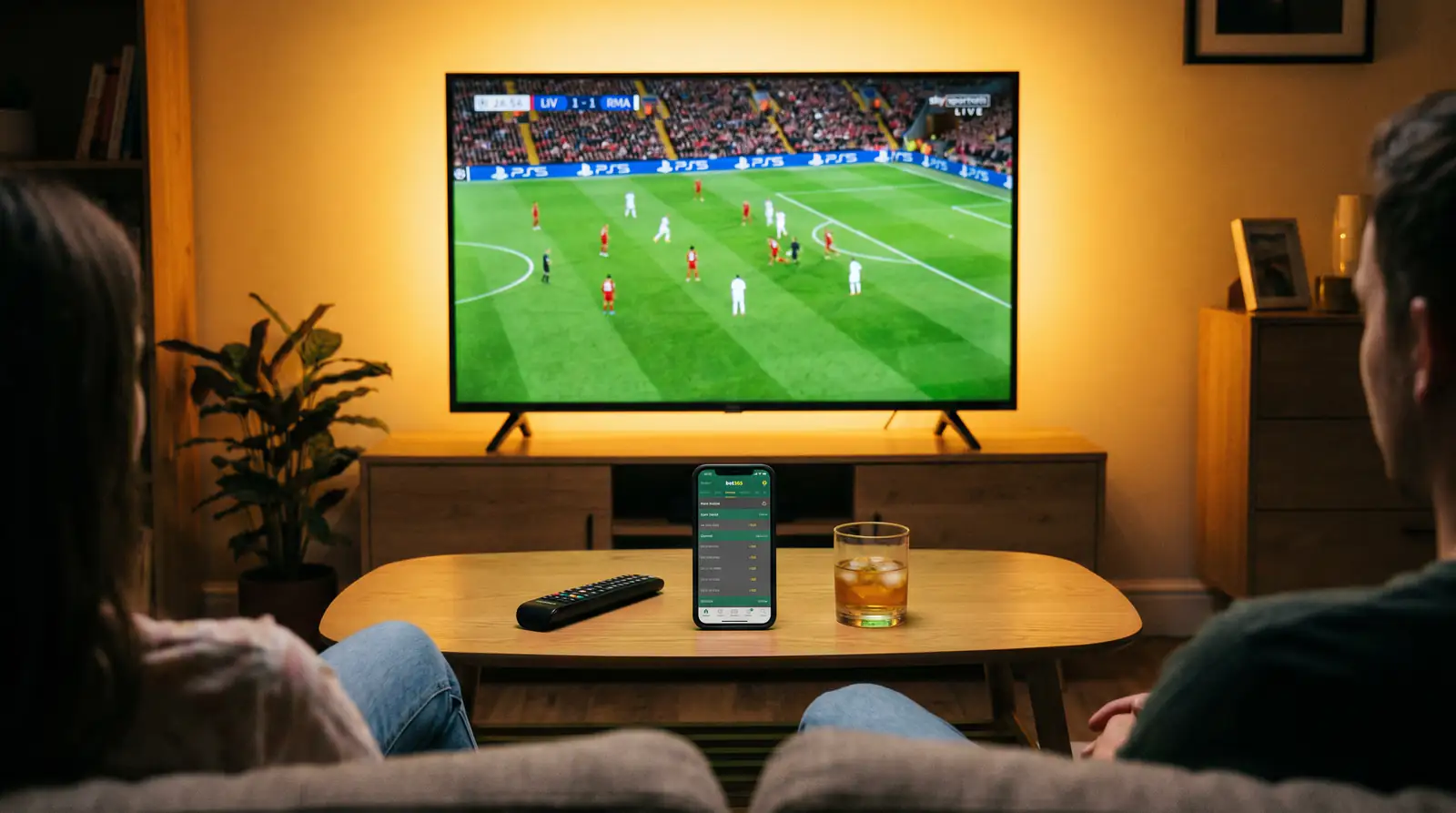
The best live streaming setups for UK football bettors combine a primary broadcast source with a secondary sportsbook app open for bet placement. The broadcast gives you the fastest visual feed; the app gives you the market. Trying to do both on one device, through one platform, is convenient but compromises either speed or screen space.
In-Play Markets Beyond Match Result: What to Look For
Match result is the default in-play market, but it is also the most efficiently priced and the hardest to find an edge in. The algorithm has the deepest data on 1X2, the overround is tightest relative to other in-play markets, and the professional money targets it first. If you are looking for value in live betting, the peripheral markets are where the engine’s pricing is weakest.
Next goal scorer is a market where the odds engine frequently misprices substitutions. When a striker comes on as a substitute in the 60th minute, the engine adjusts the anytime goalscorer price based on reduced minutes remaining, but it does not always fully account for the tactical context — a fresh striker entering against a tiring defence represents a different threat than the same player starting the match. I have tracked next goalscorer odds around substitution windows and found consistent small mispricings in the first three to five minutes after a change, before the algorithm catches up.
Over/under goals shifts throughout the match in predictable ways. A 0-0 at half-time pushes the over 2.5 goals line out to longer odds, and the market often overreacts to goalless first halves in matches with high expected goals. If your pre-match analysis pointed toward a high-scoring game and the first 45 minutes were goalless, the live over 2.5 line may offer better value than the pre-match price did — the underlying attacking dynamics have not changed, but the algorithm has repriced based on the scoreline alone.
Corners and cards markets in-play are less liquid and more volatile, which creates both opportunity and risk. The corner count can shift dramatically in a five-minute spell, and the in-play engine reprices aggressively. If you have a model or even a strong qualitative read on which team is likely to dominate set-piece situations in the second half, the live corners market can offer genuine edges — but the wider overround means you need to be more right, more often, to overcome the margin.
When to Place a Live Bet: Timing Patterns That Show Value
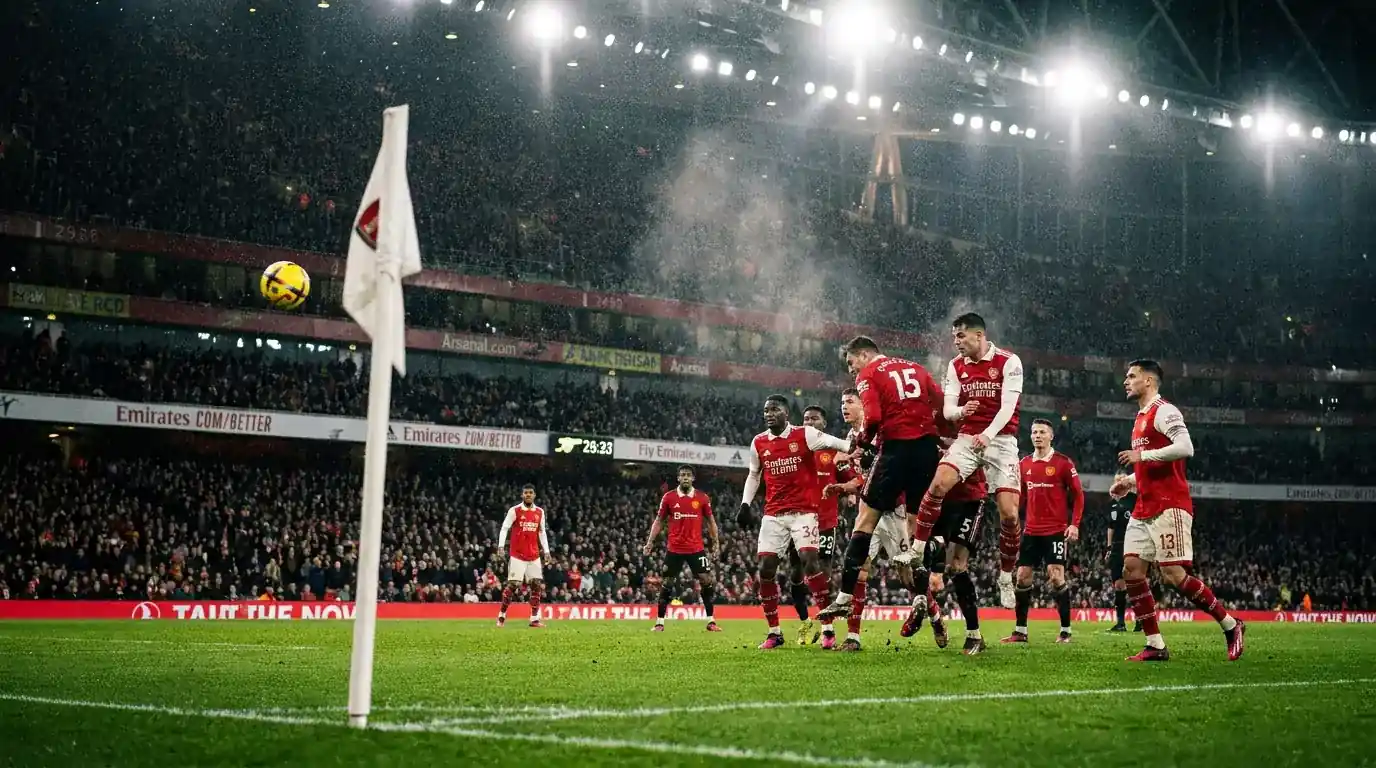
Timing is the variable that separates recreational live bettors from profitable ones, and it is the variable most punters pay the least attention to. After years of logging in-play bets with timestamps, I have identified three windows during a match where the odds engine consistently offers the most favourable prices.
The first is the opening 10 minutes. Pre-match prices carry into the early in-play market with minimal adjustment, and the overround has not yet widened to full in-play levels. If the match starts as expected — no early drama — the prices in this window are closer to pre-match value than anything you will see for the rest of the 90 minutes. I use this window when my pre-match analysis identified a bet I was close to placing but wanted to see the opening minutes before committing.
The second window is the 10 minutes following a goal that changes the match dynamic. When a favourite goes behind, the match result market overreacts. The favourite’s price lengthens more than the underlying probability justifies, because the algorithm weights the current scoreline heavily and the recreational money panics out. Football generated GBP 1.3 billion of the UK’s remote betting GGY in 2024/25 — a huge share of that flows through in-play match result markets, and the reactive money after a goal creates temporary dislocations that correct within minutes. If your model still rates the favourite to win despite going a goal down, the 5 to 10 minutes after the goal is where you find the best price.
The third window is the 55th to 65th minute — the early second half, before substitutions begin to reshape the game. This is a dead zone for casual bettors: the half-time burst of activity has passed, the late drama has not started, and liquidity dips. Lower liquidity means less sharp money in the market, and the algorithm’s prices are more influenced by the pre-match model than by real-time flow. I find more value bets in this window than in any other ten-minute period of a match.
The worst time to bet live is immediately after a dramatic event — a red card, a penalty, a late equaliser. The market is either suspended (so you cannot bet at all) or has just reopened with freshly adjusted prices that reflect the event plus an inflated overround. The excitement of the moment is precisely when the algorithm charges you the most. Discipline here is everything: watch the drama, enjoy it, and wait five minutes for the market to settle before looking for a price.
Live Cash-Out: How Speed Varies Between Platforms
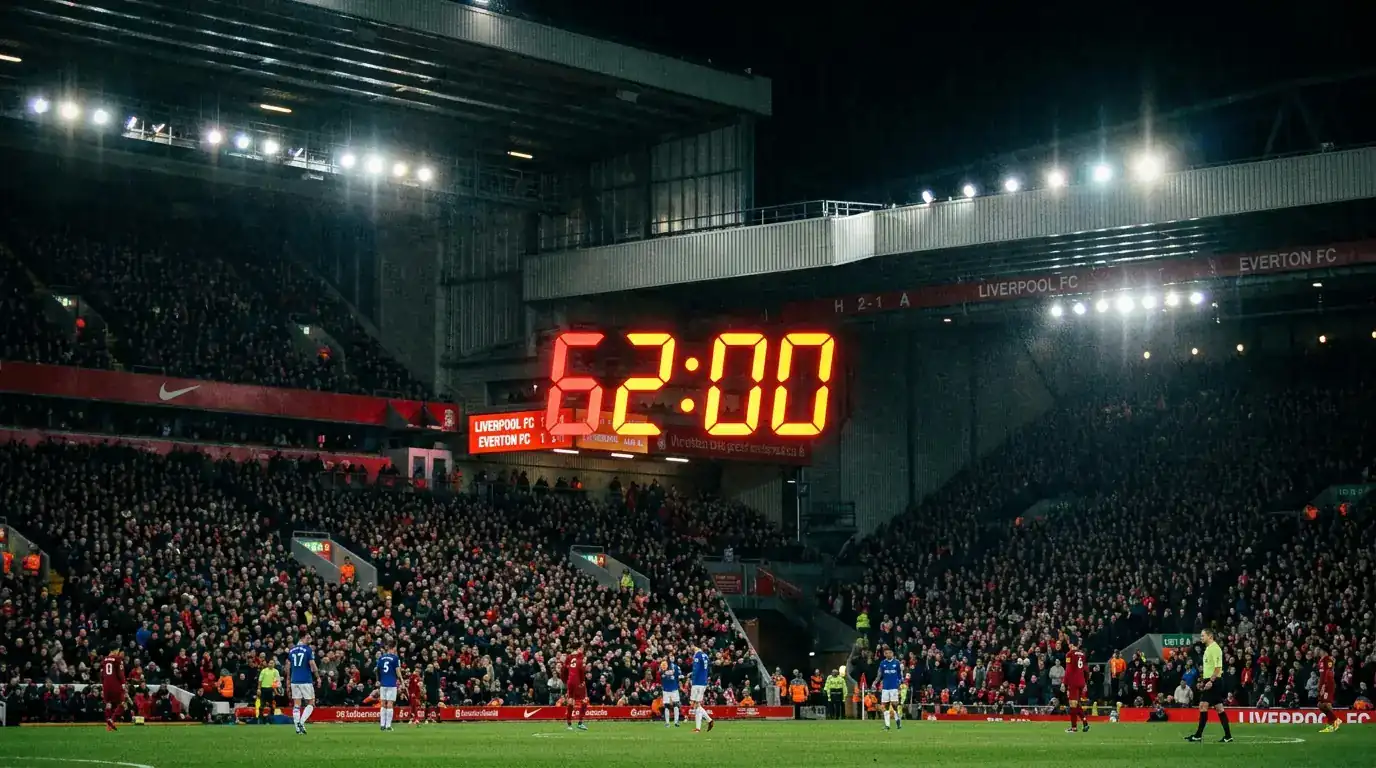
Cash-out speed during a live match varies more than most punters realise. I have tested cash-out response times across multiple platforms during Premier League fixtures and the range runs from under 2 seconds on the fastest platforms to over 10 seconds on the slowest. In a live match, 10 seconds is an eternity — the odds can shift significantly, and a cash-out offer that looked attractive when you tapped it may have been recalculated to a lower figure by the time the server processes the request.
The mechanic works like this: when you request a cash-out, the platform recalculates the offer based on current in-play odds and applies a margin. If the odds have moved between the moment you saw the offer and the moment the server processes it, the platform either honours the original offer (rare), adjusts the offer automatically (common), or rejects the request and presents a new figure (also common). Faster platforms tend to honour the original offer more reliably, which is a meaningful advantage during volatile match states.
Partial cash-out adds a layer of strategic flexibility. Instead of settling the entire bet, you lock in a portion of the return and leave the remainder running. This is useful when a match is going your way but you want to reduce exposure — say, you backed a team at half-time, they scored once but the game is still open, and you want to guarantee some return while leaving a portion in play for a potential second goal. The maths of partial cash-out is identical to full cash-out on a pro-rata basis, so the margin you pay is the same — you are just applying it to a smaller portion of your stake. For a deeper look at how cash-out pricing works across different bet types, including the hidden margin built into every offer, I have covered the mechanics separately.
Psychological Traps in Live Betting and How to Avoid Them
Live betting is designed to feel urgent. The clock is ticking, the odds are moving, the match is happening right now — and that manufactured urgency is the single biggest psychological trap in the product. Every cognitive bias that affects betting generally is amplified in the live environment, because you have less time to think and more emotional input from watching the match unfold.
The recency bias is the worst offender. A team concedes a sloppy goal and you immediately assume their defence has collapsed, so you back the opposition to score again. In reality, one goal tells you very little about the probability of a second. But the visual memory of the goal — the mistake, the celebration, the body language — overwrites your pre-match analysis in the moment. I have caught myself doing this dozens of times, and the only reliable defence is a pre-match plan. Before kick-off, I write down the specific scenarios in which I will place a live bet and the price I need to see. If the scenario occurs but the price is wrong, I do not bet. If a scenario occurs that I did not anticipate, I do not bet. The plan filters out the noise.
The sunk cost trap is the second most expensive. You placed a pre-match bet on a team to win, they go behind, and you double down with a live bet on the same team at longer odds to “recover” the original stake. This is not strategy; it is loss aversion dressed up as analysis. The live market does not care about your pre-match position. The price either offers value based on the current match state or it does not. Your existing exposure is irrelevant to that calculation.
Tim Miller, Executive Director of Research and Policy at the Gambling Commission, has noted that increases in gambling participation are driven by various factors, and that understanding what drives engagement — particularly among younger demographics — matters for both the industry and the regulator. The 18-to-24 age group shows the highest problem gambling prevalence in the UK at 5.3 per cent, and live betting’s combination of speed, visual stimulation and social media integration makes it a particularly high-risk product for impulsive bettors. Setting hard session limits — time and spend — before you open the live markets is not optional caution. It is basic operational discipline.

The final trap is overtrading. Live markets are open for 90-plus minutes per match, and the temptation to place multiple bets across a single fixture is substantial. Each bet carries a margin, and five live bets on the same match can easily cost more in cumulative margin than a single pre-match bet on the same outcome. I limit myself to a maximum of two live bets per match, and I record the reason for each one. If I cannot articulate why the price offers value in a single sentence, I do not place it.
Is live football betting more profitable than pre-match?
Not inherently. In-play markets carry wider overrounds than pre-match markets, which means the baseline margin is higher. However, the real-time nature of live betting creates temporary mispricings — particularly after goals, substitutions and during low-liquidity periods — that do not exist pre-match. Profitability depends on your ability to identify and exploit those windows while avoiding the higher-margin calm periods where no edge exists.
Which UK betting sites offer free live football streaming?
Most major UK sportsbooks offer live streaming of selected football matches, typically requiring a funded account or a bet placed on the relevant fixture. Coverage focuses on European leagues, cup competitions and international matches. Premier League fixtures are not available for streaming on UK betting platforms due to broadcast rights restrictions. The extent of streaming coverage and the quality of the feed vary significantly between platforms.
How fast do in-play odds update during a match?
In-play odds update continuously, with the total pipeline delay from a real-world event to an updated price on your screen typically running between 2 and 5 seconds. This includes the data scout coding the event, the feed transmitting to the sportsbook, the algorithm recalculating, and the new price publishing to your device. During key events like goals or red cards, the market suspends entirely for 10 to 45 seconds before reopening at adjusted prices.
Can I use a bet builder for in-play football bets?
Some UK platforms now offer in-play bet builders, though the range of available markets and the number of permitted selections is usually more limited than the pre-match version. The pricing is also less favourable because the in-play overround is wider and the correlation modelling for live events is less precise. If you want to combine multiple in-play selections, check the specific platform’s live builder availability before kick-off.
Written by the editors at Football Betting Sites.