
Both Teams to Score Betting: How to Assess BTTS Odds With Expected Goals Data
 Available in US

Both teams to score is the market that looks deceptively simple and hides genuine analytical depth. Yes or no — will both sides find the net? That binary structure makes BTTS a favourite for accumulators, and the roughly 50/50 hit rate across major leagues gives punters the comfortable feeling of near-coin-flip probability. But those headline rates mask enormous variation between matchups, and the difference between a profitable BTTS approach and a losing one comes down to how you assess each fixture’s true probability against the odds on offer. Football generated £1.3 billion in remote betting GGY in the UK to March 2025, and BTTS is one of the markets where casual money is heaviest — which creates opportunity for anyone doing the work.
BTTS Hit Rates Across Major Leagues
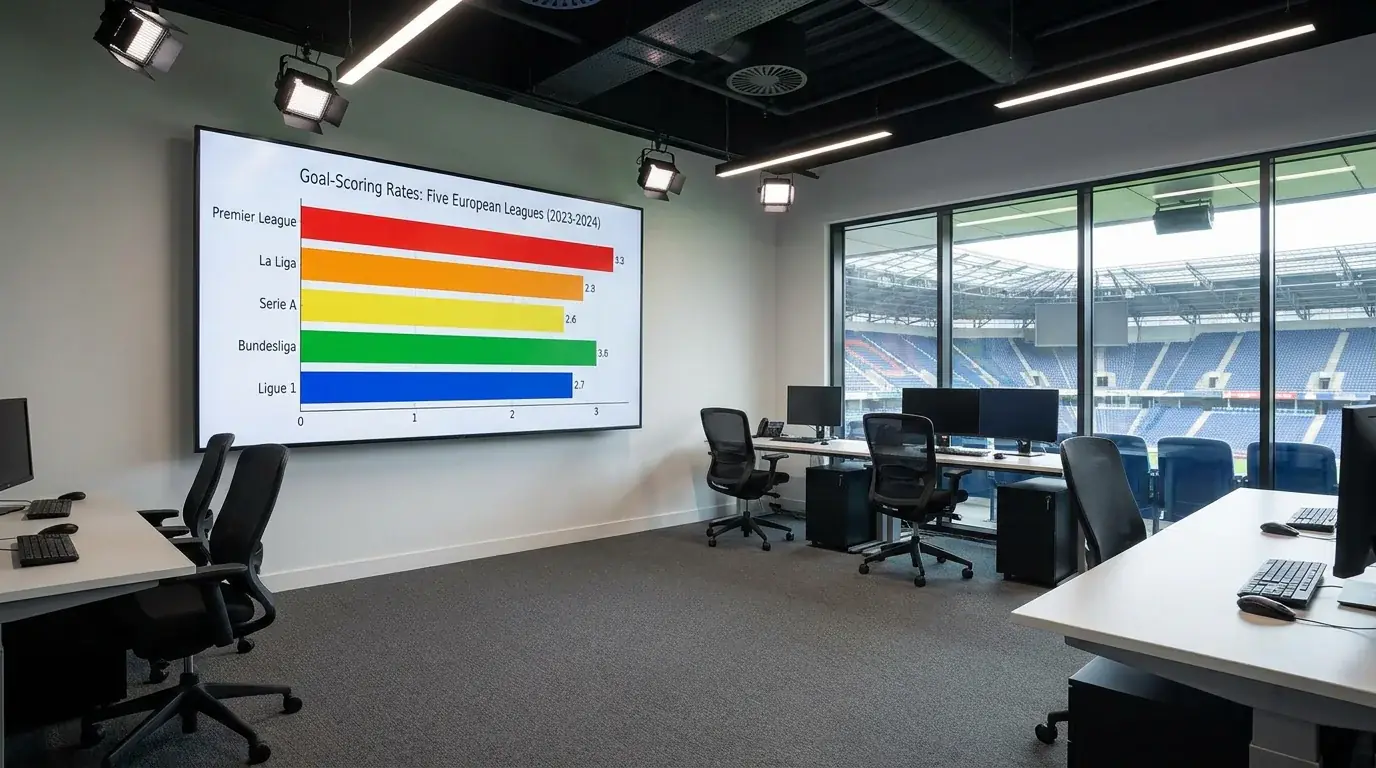
I track BTTS outcomes across the Premier League, Bundesliga, La Liga, Serie A and Ligue 1 every season. The variation between leagues is striking and stable. The Bundesliga consistently produces the highest BTTS rate — typically 55-60% of matches end with both teams scoring. The Premier League sits around 52-55%. Serie A, historically more defensive, comes in around 48-52%. Ligue 1 is the outlier in the other direction, often below 50%.
These league-level averages are starting points, not betting strategies. Within each league, specific teams distort the picture dramatically. A team playing aggressive, high-line football might see BTTS land in 70%+ of their matches, while a defensive side sitting deep might produce BTTS in under 40%. The gap between team-level BTTS rates is far larger than the gap between league-level rates, and that’s where the analysis needs to focus.
The UK online sports betting market generated $8,284 million in revenue in 2025, with sports betting representing 57.1% of the total. BTTS markets contribute to that revenue partly because the two-way structure (yes/no) makes them accessible to beginners — but the margins on BTTS are tighter than on 1X2, typically 104-106% overround, which makes them more attractive for analytical bettors too.
Using Expected Goals to Evaluate BTTS Odds
Raw goal-scoring records tell you what happened. Expected goals — xG — tell you what should have happened based on the quality of chances created. The distinction matters for BTTS assessment because teams go through periods of over- and under-performing their xG. A team that scored in 18 of their last 20 matches looks like a BTTS-friendly selection, but if their xG-per-match has been dropping and they’ve been converting at an unsustainable rate, the BTTS probability is lower than their recent record suggests.
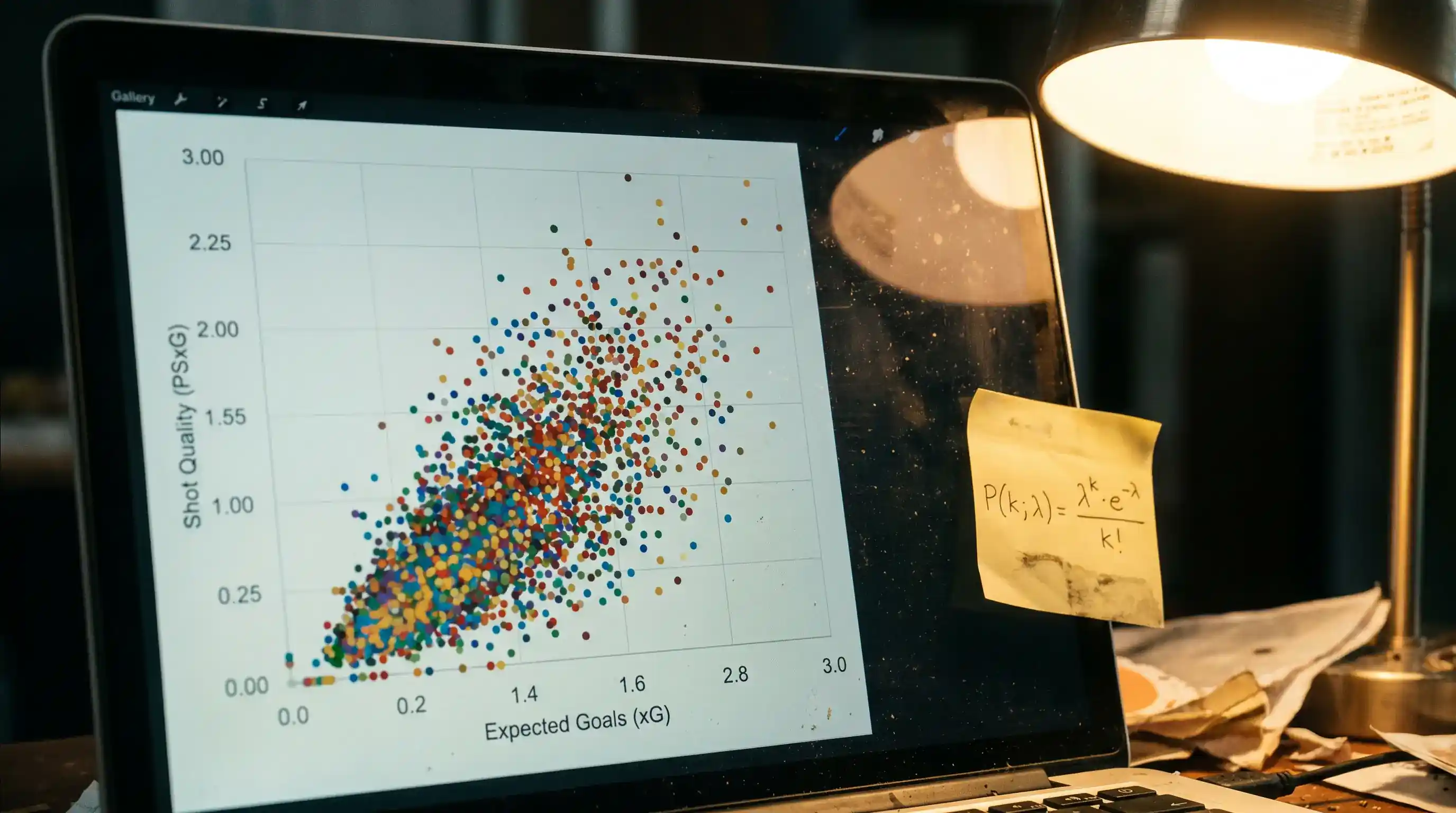
My approach: for each match, I pull xG and xG-against averages for both teams over their last 10-15 fixtures. I weight recent home or away form depending on the venue. Then I estimate the probability that each team scores at least one goal, using xG as the input to a simple Poisson-style calculation. The BTTS probability is the product of the two individual scoring probabilities.
For example: Team A’s expected goals per match at home over the last 12 fixtures is 1.65. Using Poisson, the probability of scoring zero goals with an xG of 1.65 is roughly 19%. So the probability of scoring at least one is 81%. Team B’s xG away is 1.10. Probability of zero goals: roughly 33%. Probability of at least one: 67%. BTTS probability: 0.81 x 0.67 = 0.54, or 54%. If the bookmaker is pricing BTTS Yes at decimal odds implying 50% or less, there’s potential value.
This is a simplified model, and real-world factors — missing strikers, tactical setups designed to limit chances, weather conditions, referee tendencies — add noise. But xG-based BTTS modelling consistently outperforms gut feeling or raw scoring records as a baseline for assessing these markets.
BTTS in Accumulators: Margin Stacking Risk
BTTS is one of the most popular accumulator markets, and the reason is partly mathematical and partly psychological. The near-50/50 nature of each selection makes it feel like you’re building an acca on fair bets rather than lottery tickets. But the margin story is the same as any other accumulator: each leg’s overround compounds across the slip.
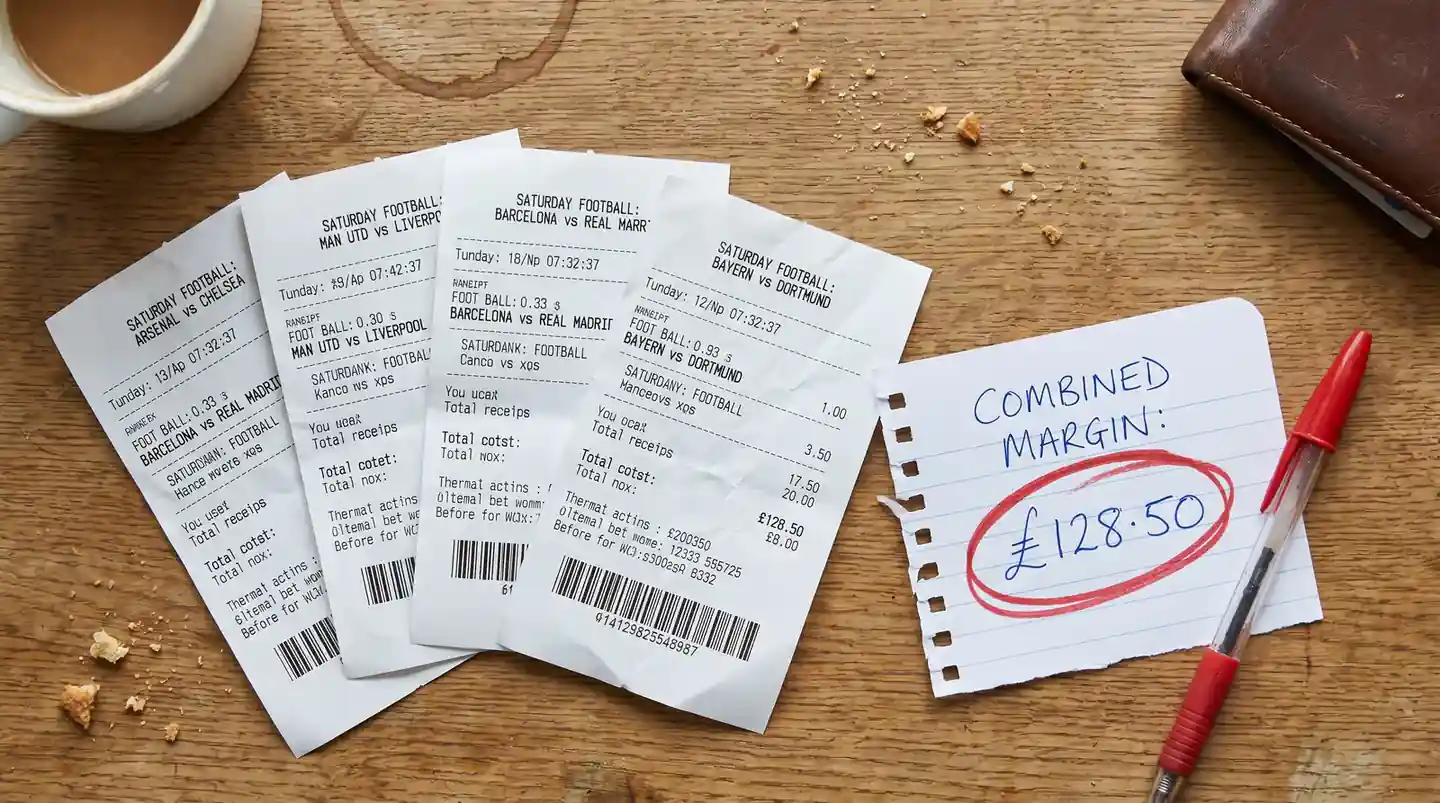
A four-fold BTTS accumulator where each leg carries a 105% overround compounds to roughly 121% — meaning the bookmaker’s edge across the full bet is around 17%. Compare that to four individual BTTS singles where you pay 5% per bet: the total margin is additive (roughly 20% across four bets) but you can win on some and lose on others, whereas the accumulator requires all four to land.
Grainne Hurst, CEO of the Betting and Gaming Council, has consistently argued that if the regulated sector becomes less competitive, bettors will simply go elsewhere. The same logic applies to market selection: if the margin on a BTTS accumulator is punitive, the rational response is to either reduce the number of legs or move to a market with tighter overrounds. BTTS singles or doubles are dramatically more forgiving than BTTS five-folds or six-folds.
Three BTTS Mistakes and How to Avoid Them
The first mistake is treating all BTTS matches as interchangeable. Backing BTTS Yes in a fixture between two attack-minded sides is a fundamentally different proposition from backing it in a match where one team creates very little. Bundling them into the same accumulator because “both are BTTS at decent odds” ignores the per-fixture probability variation that determines whether each selection is +EV or -EV.
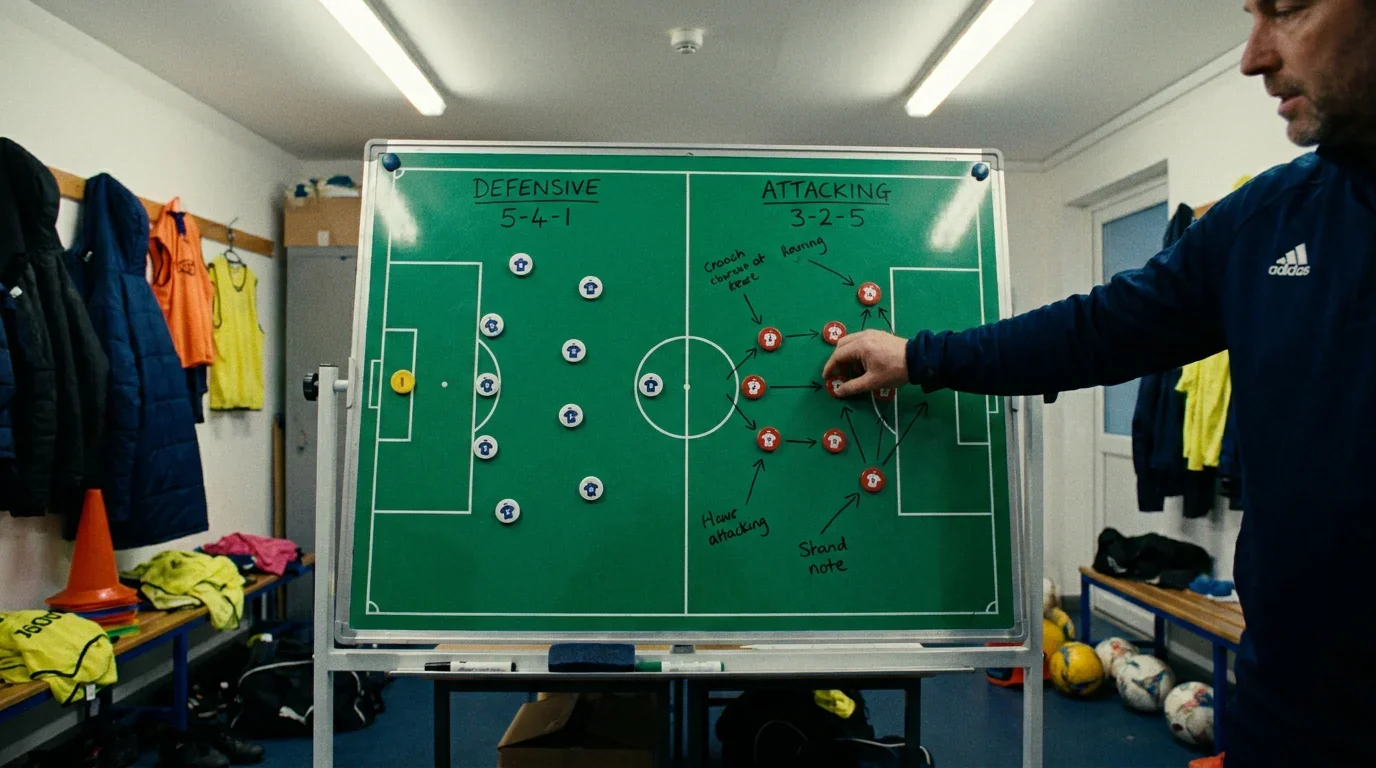
The second is ignoring match context. A team fighting relegation away from home is more likely to set up defensively than the same team at home with nothing to play for. Tactical intent shapes BTTS probability, and it’s rarely captured in the headline odds. Cup replays, dead rubbers and end-of-season fixtures all have distinct BTTS profiles that differ from the same teams’ league norm.
The third is chasing combined markets without checking the maths. “BTTS and Over 2.5 Goals” is popular because both conditions feel correlated — if both teams score, surely there are likely to be at least three goals? Not necessarily. BTTS with a 1-1 scoreline is two goals, not three. The joint probability of BTTS Yes AND Over 2.5 is meaningfully lower than BTTS Yes alone, but the odds don’t always reflect the full gap. Sometimes the combined market offers value; often it doesn’t. Calculate the implied probability of the combined selection and compare it to your modelled estimate before assuming the correlation works in your favour.
BTTS betting rewards discipline over volume. A small number of well-analysed selections based on xG data and match context will outperform a scatter-gun approach of bundling every “looks about 50/50” fixture into an accumulator. The market is accessible, the data is available, and the margins are manageable — but only if you treat each selection as an individual probability assessment rather than a tick on an acca slip.

Does BTTS include own goals?
Yes. Both teams to score is settled on the final match result, regardless of how the goals were scored. An own goal counts as a goal for the team credited with it in the official match result. If the only goal scored by a team is an own goal by the opposition, BTTS is still settled as that team having scored.
Is BTTS and Over 2.5 Goals a good accumulator market?
It can offer value in specific fixtures where both teams have high xG averages, but the joint probability is lower than many bettors assume. A 1-1 result satisfies BTTS but not Over 2.5 Goals. Always calculate the implied probability of the combined market against your own estimate rather than assuming the two conditions are strongly correlated.
Prepared by the Football Betting Sites editorial staff.