In-Play Football Betting Strategy: How to Read Live Odds and When to Act
 Available in US
In-play betting is where the bookmaker’s edge is thinnest and thickest simultaneously. Thinnest because live markets move fast, pricing models carry more uncertainty, and a bettor watching the match has information the algorithm doesn’t fully capture. Thickest because the same speed and uncertainty tempt emotional decisions — chasing a losing pre-match bet, overreacting to a goal, staking on impulse. I’ve made money and lost money in-play in roughly equal measure, and the difference has always been discipline, not prediction skill.
How Live Odds Move During a Football Match
Pre-match odds represent the market’s assessment before a ball is kicked. The moment kickoff arrives, those prices become live — updating in real time based on match events, time elapsed and the evolving probability model. A goal shifts every market instantly. A red card reprices the match fundamentally. Even passages of play without a defining event cause gradual drift as the clock ticks and the probability of a draw increases.
The bookmaker’s in-play model processes data feeds — shots, possession, expected goals, corners, dangerous attacks — and adjusts prices accordingly. But the model has latency. Between a goal being scored and the market fully repricing, there’s a window of seconds where the odds haven’t caught up with reality. Professional in-play bettors exploit these windows, which is why bookmakers temporarily suspend markets around goal events and other significant moments.

Football generated £1.3 billion in remote betting GGY in the UK to March 2025, and in-play betting represents a growing share. The UK online sports betting market’s $8,284 million revenue in 2025 includes a substantial live betting component — roughly 5% of the entire adult population participates in live football betting, rising to 9% among men. The volume justifies the operator’s investment in live pricing infrastructure, but it also means the markets are deep enough for individual bettors to find value.
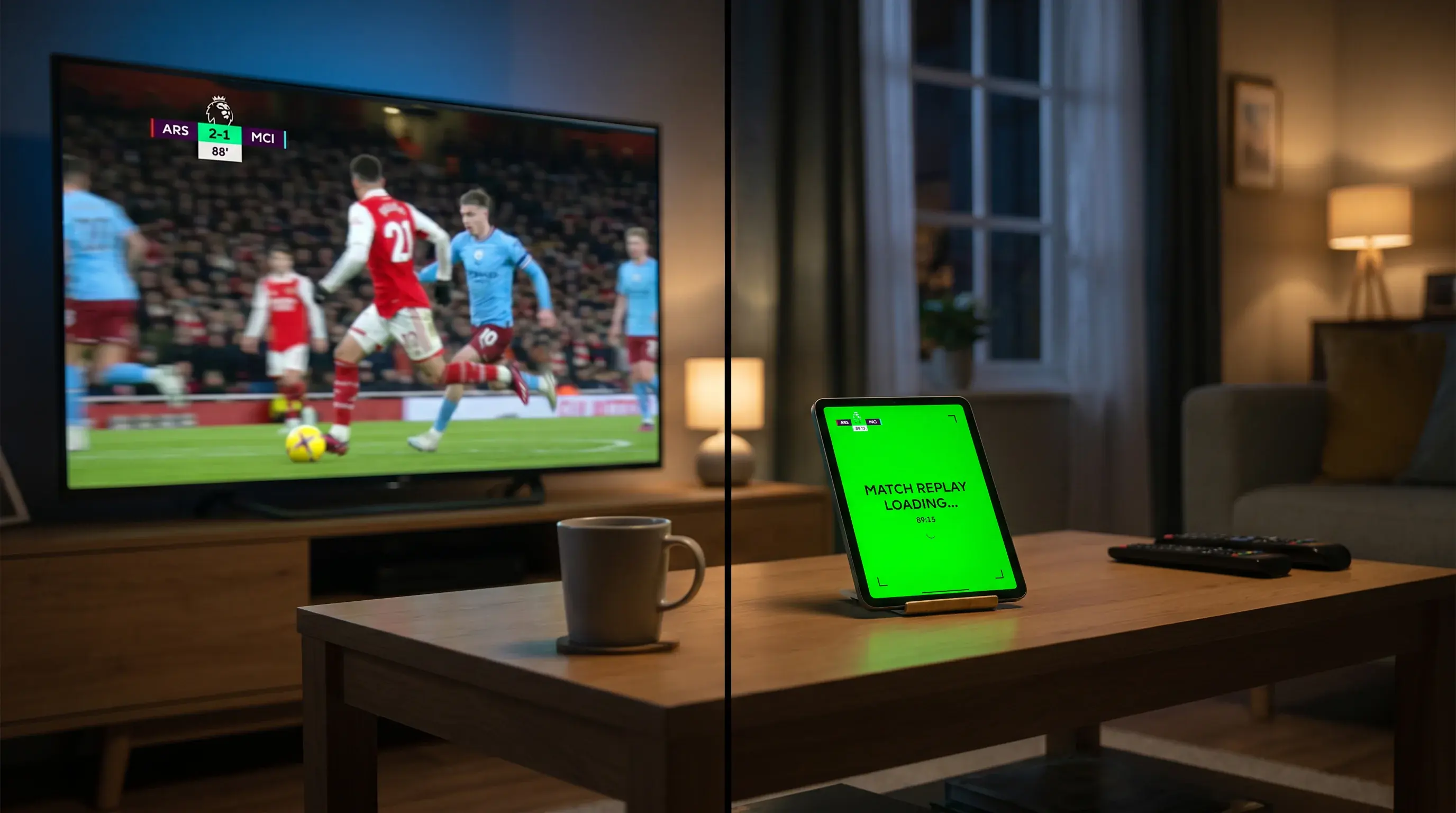
Streaming quality and data feeds matter for in-play betting in ways they do not for pre-match. A two-second delay in your video stream relative to the bookmaker’s data feed means the market has already adjusted by the time you see the event. If you are betting in-play through a platform that also streams the match, the delay is usually minimal. If you are watching on a separate broadcast with a longer delay, the live odds you see may already be stale. I always bet in-play through the same platform I am watching on, and I avoid placing bets in the immediate aftermath of any event I saw with noticeable lag.
Reading Match State: Goals, Red Cards and Tactical Shifts
I watch every match I bet in-play. That sounds obvious, but a surprising number of live bettors react to scoreboard notifications rather than watching the actual football. The scoreline tells you what happened. The match dynamics tell you what’s likely to happen next — and those dynamics are what the pricing model struggles to capture.
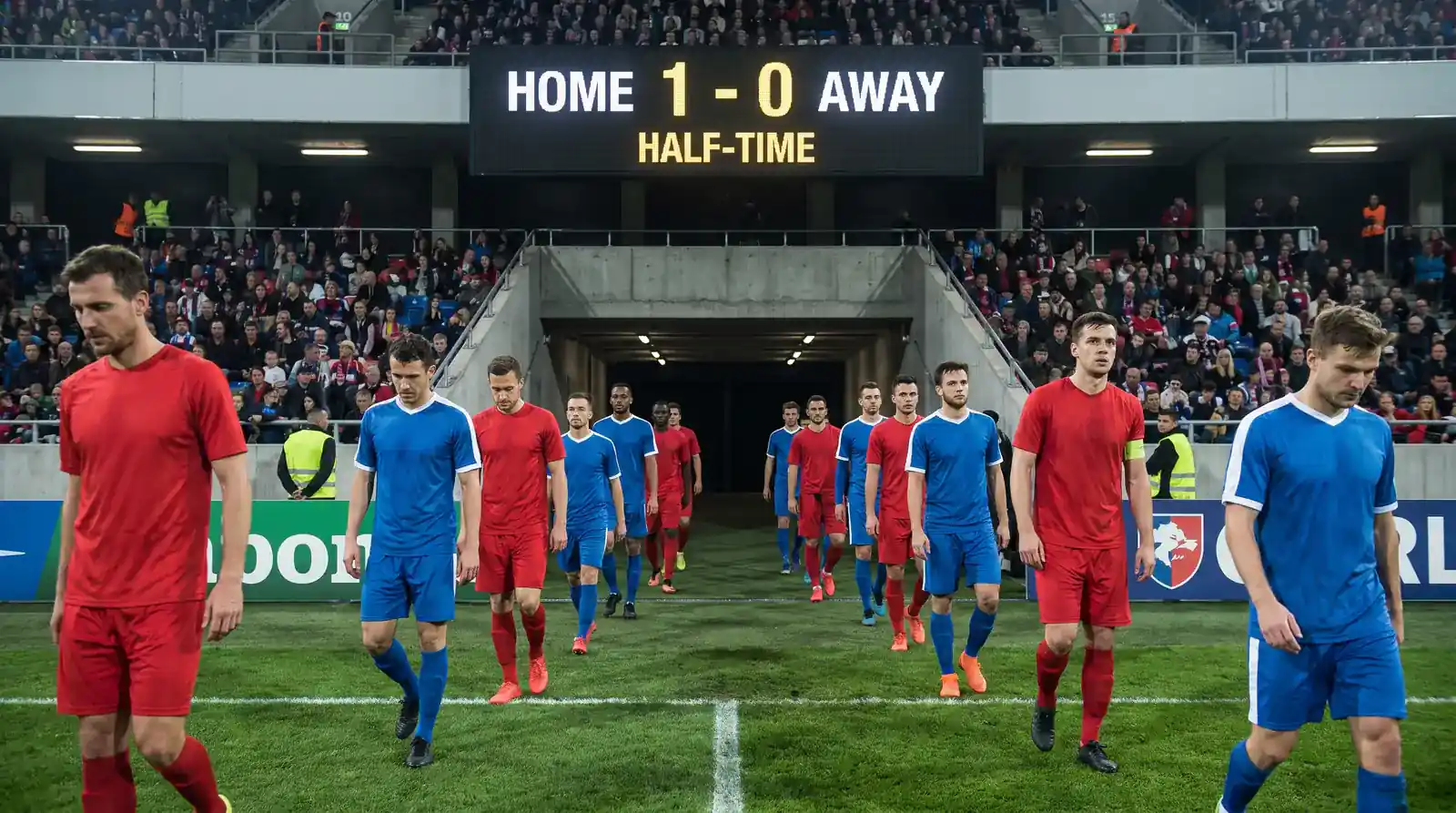
A team leading 1-0 at half-time might be dominant or might be clinging on. The scoreline is identical, but the in-play prices should be different. If the leading side has an xG of 1.8 and the trailing side has 0.3, the 1-0 lead is solid and the current match-result price reflects that. If the xG is 0.7 vs 1.5 — the trailing side has been the better team — the 1-0 lead is fragile, and there may be value in backing the draw or the comeback.
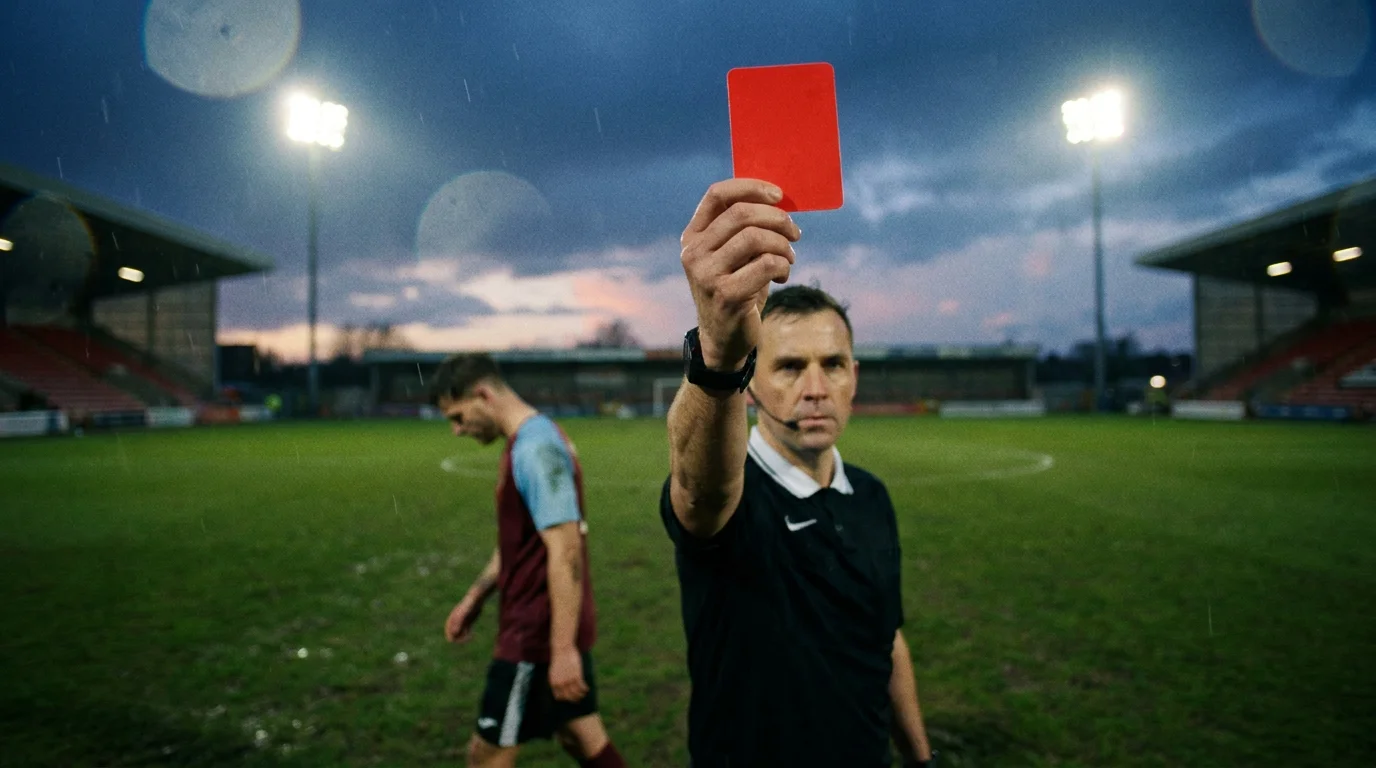
Red cards create the largest pricing dislocations. A team going down to ten men triggers an immediate and dramatic repricing — but the market often overreacts. The actual impact of a red card depends on when it happens (early vs late), the current scoreline (defending a lead vs chasing), and which player was sent off (a defender vs a forward). A team losing a forward while leading 1-0 with 20 minutes left is barely disadvantaged — they’ll defend deeper anyway. The in-play model prices the red card generically; your match-specific assessment can be more nuanced.
When Not to Bet In-Play
The most profitable in-play decision I make every weekend is choosing not to bet. In-play markets are designed to encourage action — the prices move, the match unfolds, the temptation to “get involved” is constant. Every bet you don’t place in-play that you would have lost is money saved, and the average in-play bettor would improve their returns dramatically by simply reducing their volume.
I impose three rules on myself for live betting. First, no bets in the first 15 minutes — the match state is too uncertain and my pre-match analysis hasn’t been tested yet. Second, no bets immediately after a goal — emotional reactions are worst in the 60 seconds following a goal event, and the market is simultaneously at its widest spread. Third, no live bets to “hedge” a pre-match position unless the maths specifically justifies it — hedging for comfort rather than value is an expensive habit.
The match-state framework I use divides live betting opportunities into three categories: confirmation bets, contrarian bets and abstention. Confirmation bets validate my pre-match thesis — the match is unfolding as I predicted, and the live price offers value because the market has not fully adjusted. Contrarian bets go against the obvious narrative — a team that conceded early but is clearly the stronger side, where the live price has overreacted to the goal. Abstention is the default for everything else. If the match does not fit cleanly into one of the first two categories, the correct in-play action is no action at all.

In-play football betting rewards restraint more than any other market. The opportunities are real, but they’re outnumbered by the traps. Wait for the match state to confirm your pre-match thesis, act only when the live price diverges meaningfully from your updated assessment, and accept that most live matches will not produce a betting opportunity worth taking. That patience, more than any tactical insight, is what separates profitable in-play bettors from the majority who fund the bookmaker’s live trading desk.
Why do bookmakers suspend live betting markets during goals?
Markets are suspended during goals, red cards, penalties and other significant events because the pricing model needs time to recalculate. The suspension prevents bettors from placing bets at stale odds that no longer reflect the match state. Markets typically reopen within 30-90 seconds once the new prices are set.
Is in-play football betting more profitable than pre-match betting?
Not inherently. In-play markets carry wider spreads during volatile moments and narrower spreads during stable phases. The potential for value is higher because pricing models are less efficient in real time, but the risk of emotional or impulsive betting is also much higher. Most profitable bettors use in-play selectively to complement pre-match positions rather than as a standalone approach.
Prepared by the Football Betting Sites editorial staff.