Football Betting Odds Explained: Formats, Implied Probability and Overround
 Available in US

I spent my first three months placing football bets without understanding that the numbers on screen were telling me exactly how much the bookmaker planned to keep. That ignorance cost me more than any single bad prediction ever did. Football betting generated roughly £1.3 billion in gross gambling yield across the UK in the year to March 2025 — and the mechanics behind every penny of that revenue start with how odds are set, displayed and interpreted. Once you understand the three formats UK bookmakers use, you stop guessing and start calculating.
Fractional, Decimal and American: Three Ways to Show the Same Price
A few years back I was comparing the same Arsenal match across three different platforms and genuinely thought I was looking at three different prices. One showed 6/4, another 2.50, and a third +150. They were identical. The confusion is deliberate — or at least convenient for operators who’d rather you didn’t comparison-shop too easily.
Fractional odds are the UK default. A price of 6/4 means for every £4 you stake, your profit is £6 if the bet wins. Your total return is £10 — stake plus profit. The numerator is profit, the denominator is stake. Simple enough for round numbers, but fractional odds get awkward fast. Try working out the return on a 15/8 accumulator leg in your head while the match is live. Most experienced punters I know switched to decimals years ago precisely because fractional maths slows you down at the worst moments.
Decimal odds show your total return per £1 staked, stake included. That 6/4 fractional price becomes 2.50 in decimal — stake £1, get back £2.50, profit £1.50. The conversion formula is straightforward: divide the fraction (6 divided by 4 = 1.5), then add 1. Decimals are the standard across European sportsbooks and every betting exchange. They also make accumulator calculations trivially easy: multiply each leg’s decimal odds together, and you have the combined price.
American odds revolve around £100 benchmarks. A positive number like +150 tells you how much profit a £100 stake would generate (£150 profit). A negative number like -200 tells you how much you need to stake to make £100 profit (stake £200, profit £100). UK bookmakers rarely display American odds by default, but you’ll encounter them on US-facing platforms. Converting from American to decimal: for positive odds, divide by 100 and add 1 (so +150 becomes 2.50). For negative odds, divide 100 by the absolute value and add 1 (so -200 becomes 1.50).
None of these formats changes the underlying probability or the payout. They’re different languages for the same maths. What matters is choosing the format that lets you calculate fastest — and for most football betting, that’s decimals.

How to Convert Odds Into Implied Probability
The first time I sat down and actually converted a set of match odds into percentages, I felt genuinely annoyed that nobody had shown me sooner. Every price a bookmaker offers implies a probability — their estimate, adjusted for margin, of that outcome happening. Strip out the margin and you have a rough gauge of what the market believes.
The formula for decimal odds is direct: implied probability equals 1 divided by the decimal price, multiplied by 100 to get a percentage. A decimal price of 2.50 gives you 1 / 2.50 = 0.40, or 40%. A short-priced favourite at 1.33 translates to 1 / 1.33 = 0.7519, roughly 75.2%.
For fractional odds, add the numerator and denominator together, then divide the denominator by that sum. With 6/4: denominator 4, sum 10, so 4/10 = 40%. Same result as the decimal route, which is the point.
Here’s where it becomes useful in practice. Suppose a bookmaker prices a Premier League match as follows: Home 2.10, Draw 3.40, Away 3.80. Converting each: Home implies 47.6%, Draw implies 29.4%, Away implies 26.3%. Add those together and you get 103.3% — not 100%. That surplus is the overround, and it represents the bookmaker’s built-in margin. The true probabilities the bookmaker estimates internally must add up to 100%, but the published odds are shaded so that the total exceeds 100%. That excess is their edge.
Understanding implied probability means you can compare your own assessment of a match against the market. If you believe the home side has a 55% chance but the odds imply only 47.6%, there could be value there. If your assessment matches or falls below the implied percentage, the price is against you. This is the foundation of every serious betting approach.

What the Overround Reveals About a Bookmaker’s Margin
I track overrounds across Premier League 1X2 markets every matchweek. The numbers vary more than most punters realise. On a high-profile Saturday fixture, the overround on the match-result market might sit between 103% and 105% across major UK bookmakers. Drop down to a midweek Championship match and I’ve recorded overrounds north of 108%. The UK online sports betting market generated over $8.2 billion in revenue during 2025, with sports betting representing 57.1% of that total — and the overround is the mechanism that makes all of it possible.
Think of the overround as a hidden commission. If you placed a proportionally correct bet on every outcome at a bookmaker with a 104% overround on a 1X2 market, you’d lose roughly 3.8% of your total stake regardless of the result. That 3.8% is the theoretical margin. In practice, most punters don’t bet every outcome, so individual results vary wildly — but over hundreds of bets, the overround grinds you down unless you’re consistently finding prices that exceed true probability.

Calculating the overround yourself takes seconds. Sum the implied probabilities of all outcomes in a market. For a three-way 1X2 market, add the three implied percentages. Subtract 100 and you have the overround as a percentage. For a two-way market like Both Teams to Score (Yes/No), the same approach applies. Two-way markets tend to have tighter overrounds — often 104% to 106% — because there’s less room to hide margin when there are only two outcomes.
Lower overrounds mean better value for you. A 102% overround on a three-way market means the bookmaker is taking roughly 1.96% margin. A 106% overround on the same market pushes that to 5.66%. Over a season of weekend accumulators, the difference between shopping at a 103% book and a 106% book compounds significantly.
How Odds Multiply in Accumulators and Why the Margin Compounds
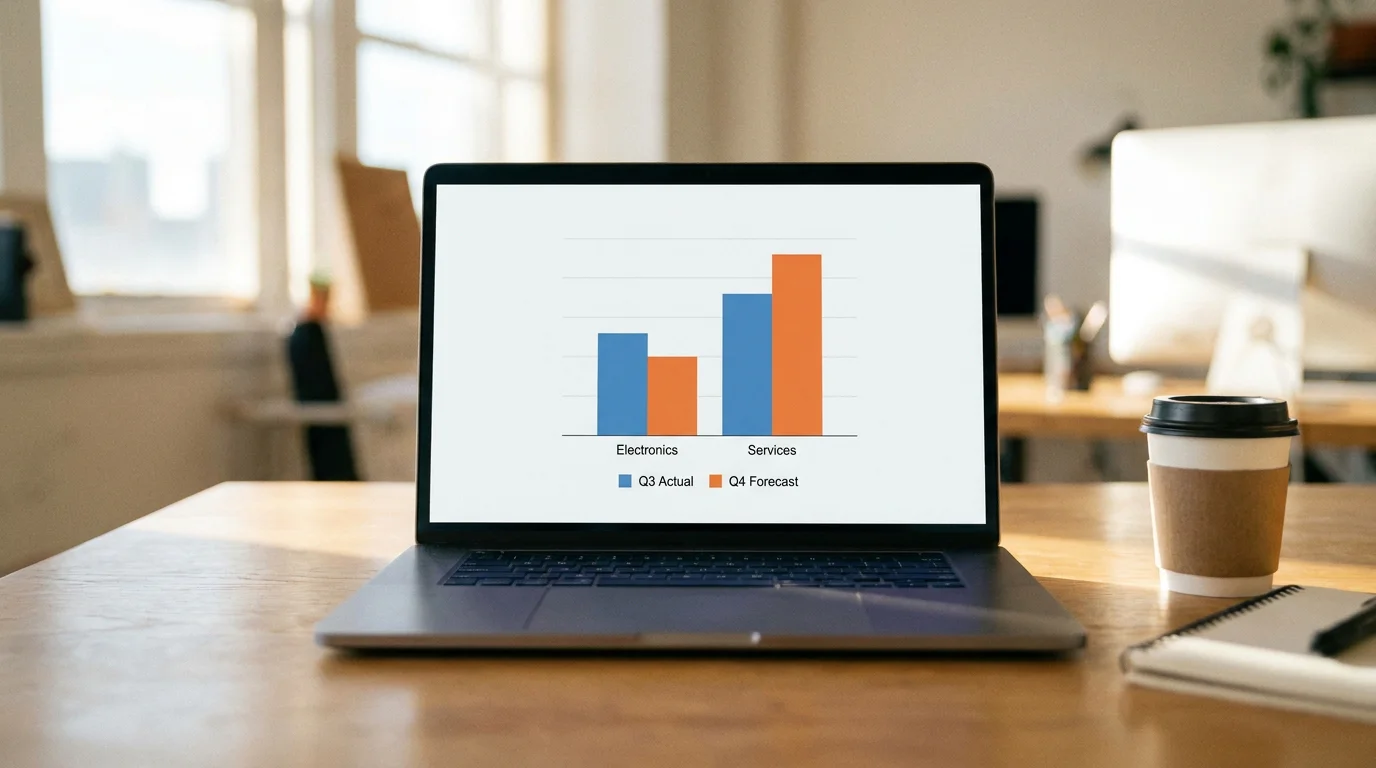
This is where overround becomes genuinely painful, and where I’ve seen more bankrolls erode than anywhere else. When you combine selections into an accumulator, you multiply the decimal odds together. But you’re also multiplying the margins together.
Take a four-fold accumulator where each leg sits in a market with a 104% overround. A single-bet margin of roughly 3.8% doesn’t sound catastrophic. But compounded across four legs, the effective margin approaches 16%. You’re giving up nearly a sixth of your expected return to the bookmaker’s edge before a ball is kicked. Push that to a ten-fold acca and the compounded margin can exceed 40%. This is why long accumulators are enormously profitable for bookmakers, even when they occasionally pay out eye-catching sums.
The practical takeaway: fewer legs with lower overround markets beat more legs at standard margins. If you’re going to build accumulators, hunt for markets and bookmakers where the overround is tightest on each individual leg. Two-way markets like Over/Under 2.5 Goals or BTTS typically carry less margin than three-way match-result markets, making them better building blocks for multis — provided your analysis supports the selections.
Understanding how odds formats, implied probability and overround connect doesn’t guarantee winning bets. But it guarantees you’ll stop making losing decisions out of ignorance — and in a market this large, that’s where the edge begins.
What is the easiest odds format for beginners?
Decimal odds are the most straightforward for beginners. They show your total return per unit staked in a single number — multiply your stake by the decimal price and you have your payout. No fraction arithmetic required, and accumulator calculations are simple multiplication.
How much profit margin does a typical bookmaker take on a football match?
On a Premier League 1X2 market, the overround usually sits between 103% and 106%, translating to a theoretical margin of roughly 2.9% to 5.7% on that market. Lower-profile matches and more exotic markets tend to carry wider margins, sometimes exceeding 108% overround.
Created by the ”Football Betting Sites” editorial team.