Football Betting for Beginners in the UK: A Step-by-Step First Bet Guide
 Available in US

Roughly 47% of UK adults participate in some form of gambling within any four-week period, and a significant share of newcomers arrive through football. If you’ve never placed a bet before and the terminology feels like a foreign language, that’s normal. I remember staring at my first bet slip for five minutes because I genuinely didn’t understand why the numbers next to each team were different. This guide walks you through everything from opening an account to placing your first bet, in the order you’ll actually encounter it.
Setting Up a Betting Account: Verification and Deposits
Before you can bet a single penny, every UK-licensed bookmaker will need to verify your identity. This isn’t optional — since February 2025, operators must run financial risk assessments once your net losses cross £150 in a rolling 30-day period, and the identity verification at registration is the foundation of that compliance chain. The process is straightforward but takes a few minutes.
You’ll need to provide your full name, date of birth, address and a valid email or phone number. Most operators verify your identity automatically against databases like the electoral roll. If automatic verification fails — perhaps because you’ve recently moved or your name differs slightly between documents — you’ll be asked to upload a photo of your passport, driving licence or a recent utility bill. This usually resolves within a few hours.
Once verified, you’ll deposit funds. The major payment methods across UK bookmakers include debit card (credit cards are banned for gambling in the UK), PayPal, Apple Pay, Google Pay, bank transfer and various e-wallets. Minimum deposits range from £5 to £10 depending on the operator and payment method. Choose whichever you’re most comfortable with — and before depositing, set a deposit limit. Every UK bookmaker must offer this tool, and setting a weekly or monthly cap before your first bet is the single smartest move a new bettor can make.

Reading Odds and Placing Your First Bet
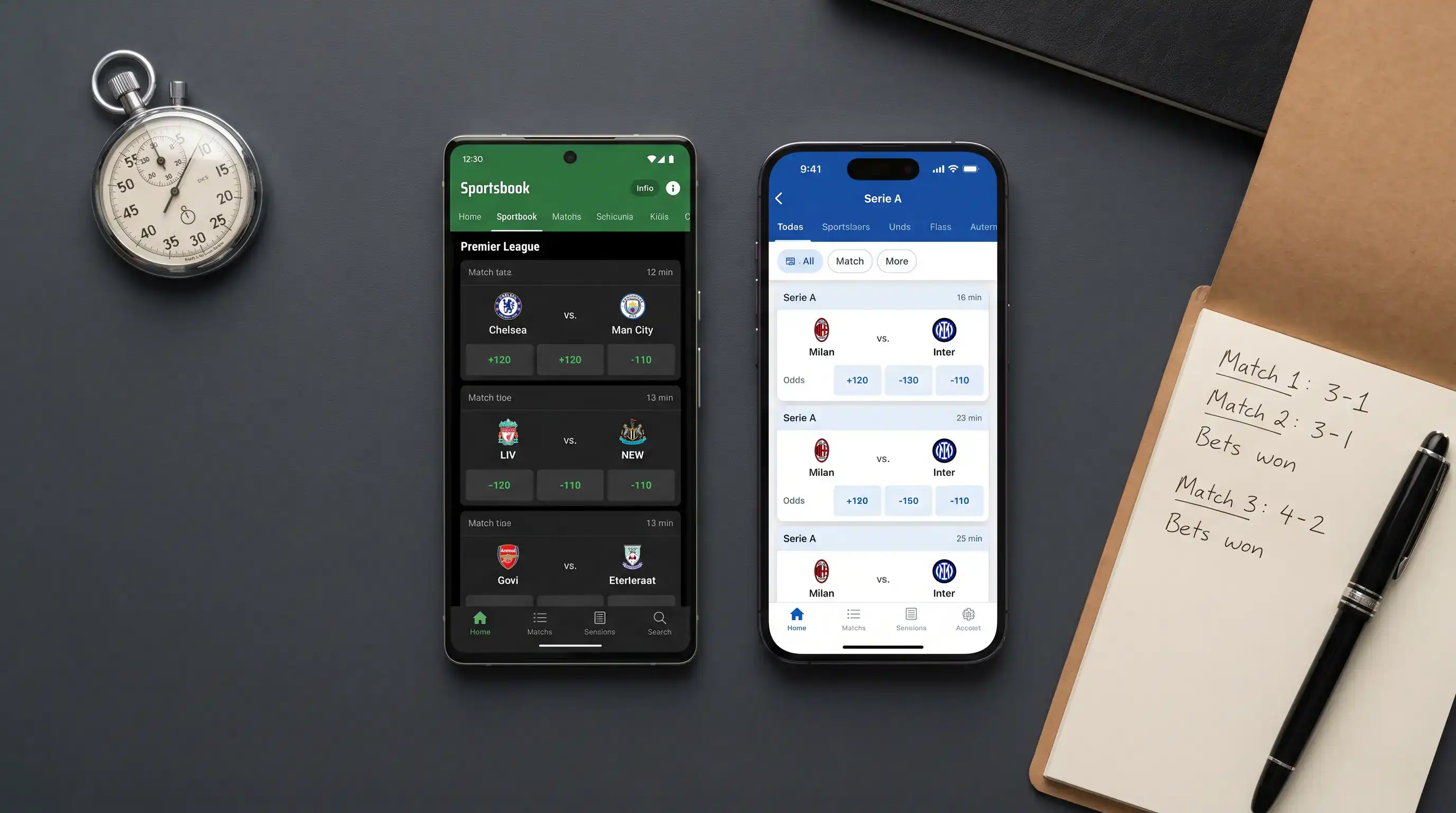
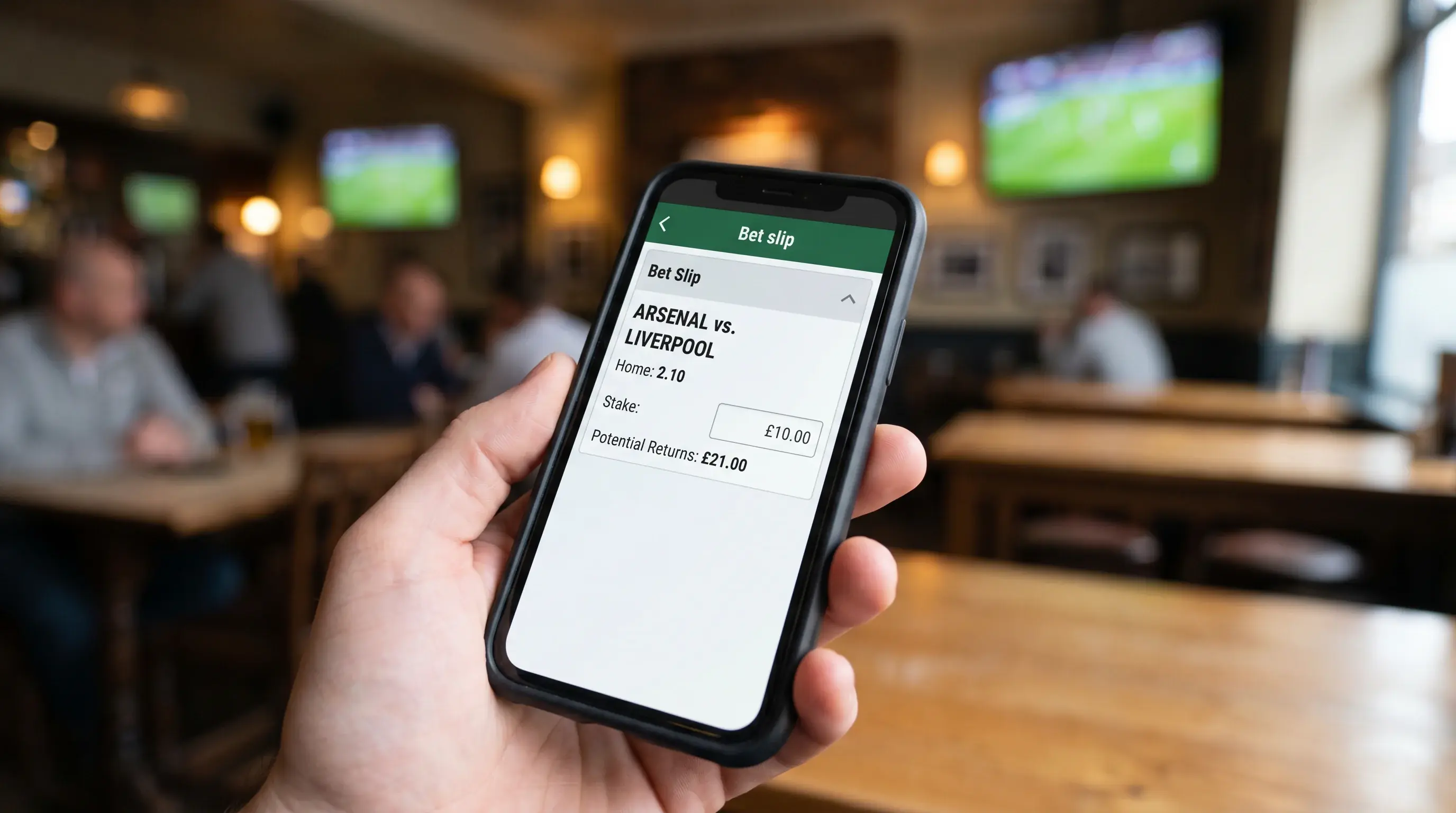
The numbers next to each football outcome represent the odds — essentially the price you’re offered for a particular result. UK bookmakers default to either fractional odds (like 5/2) or decimal odds (like 3.50), and you can usually switch between formats in your account settings. I’d recommend starting with decimals because the maths is simpler: your potential return is your stake multiplied by the decimal price. A £10 bet at 3.50 returns £35 if it wins (£25 profit plus your £10 stake).
To place a bet, navigate to the football section, select a match and click on the outcome you want to back. It will appear on your bet slip — usually a panel on the right side of the screen or a floating bar at the bottom of the mobile app. Enter your stake, check the potential return, and confirm. That’s it. Your bet is placed and will be settled after the match finishes.
A word on what “settled” means: the bookmaker processes the result and either adds your winnings to your account balance or deducts your lost stake. Most football bets are settled within minutes of the final whistle. Some markets — like “correct score” or “first goalscorer” — may take slightly longer if there’s a VAR review or a disputed goal that needs official confirmation.
The Five Football Markets Every Beginner Should Know
I started with match result and didn’t learn about other markets for months. That was a waste of opportunity. Here are the five markets you’ll encounter most often and what each one means.
Match result, also called 1X2, is the simplest: pick the home win (1), the draw (X) or the away win (2). Your bet wins only if your exact selection is the outcome at full time. A draw is the result most beginners overlook — in the Premier League, roughly 25-27% of matches end level.
Both teams to score (BTTS) is a yes/no market. Will both sides score at least one goal during the match? It doesn’t matter who wins or what the final score is — only whether each team finds the net. In most European leagues, BTTS lands “yes” in around 50-55% of matches, which makes it feel close to a coin flip but it isn’t one.
Over/under goals uses a line — most commonly 2.5 goals. “Over 2.5” wins if three or more goals are scored in the match. “Under 2.5” wins if two or fewer goals are scored. The .5 in the line eliminates the possibility of a draw on the market itself: the result is always over or under, never exactly on the line.
Correct score asks you to predict the exact final scoreline. The odds are much higher because the probability of any single correct score is low — a 1-1 draw might be priced at 6.00 to 7.00, while a 4-3 might be 80.00 or higher. The appeal is the large potential payout from a small stake, but the hit rate is correspondingly low.
Accumulator bets combine multiple selections across different matches into a single wager. All selections must win for the bet to pay out. The odds multiply together, so a four-fold accumulator of four selections each at 2.00 pays 16.00 (2 x 2 x 2 x 2). The payout is attractive, but the probability of landing all four drops rapidly — and the bookmaker’s margin compounds across each leg.

Bankroll Rules Before You Start
Tim Miller, Executive Director of Research and Policy at the Gambling Commission, has noted that increased gambling participation doesn’t automatically mean increased harm — but the overlap between the two is real. Setting boundaries before you place your first bet isn’t just sensible advice. It’s the difference between football betting being a controlled hobby and it becoming something that controls you.
Start with a fixed amount you can afford to lose entirely. Not the amount you hope to bet — the amount you’re comfortable writing off as entertainment spending. For most people, that’s somewhere between £20 and £50 per month. Set that as your deposit limit on the bookmaker’s platform and don’t override it.
Stake consistently. A common beginner approach is flat staking: betting the same amount on every selection, regardless of confidence level. One to two percent of your total bankroll per bet is a standard recommendation — so if your bankroll is £50, stake £0.50 to £1.00 per bet. This sounds tiny, and it is. The point isn’t to win life-changing sums from a small bankroll. The point is to learn the mechanics, develop your analysis and build a track record of decisions without risking money that matters to you.
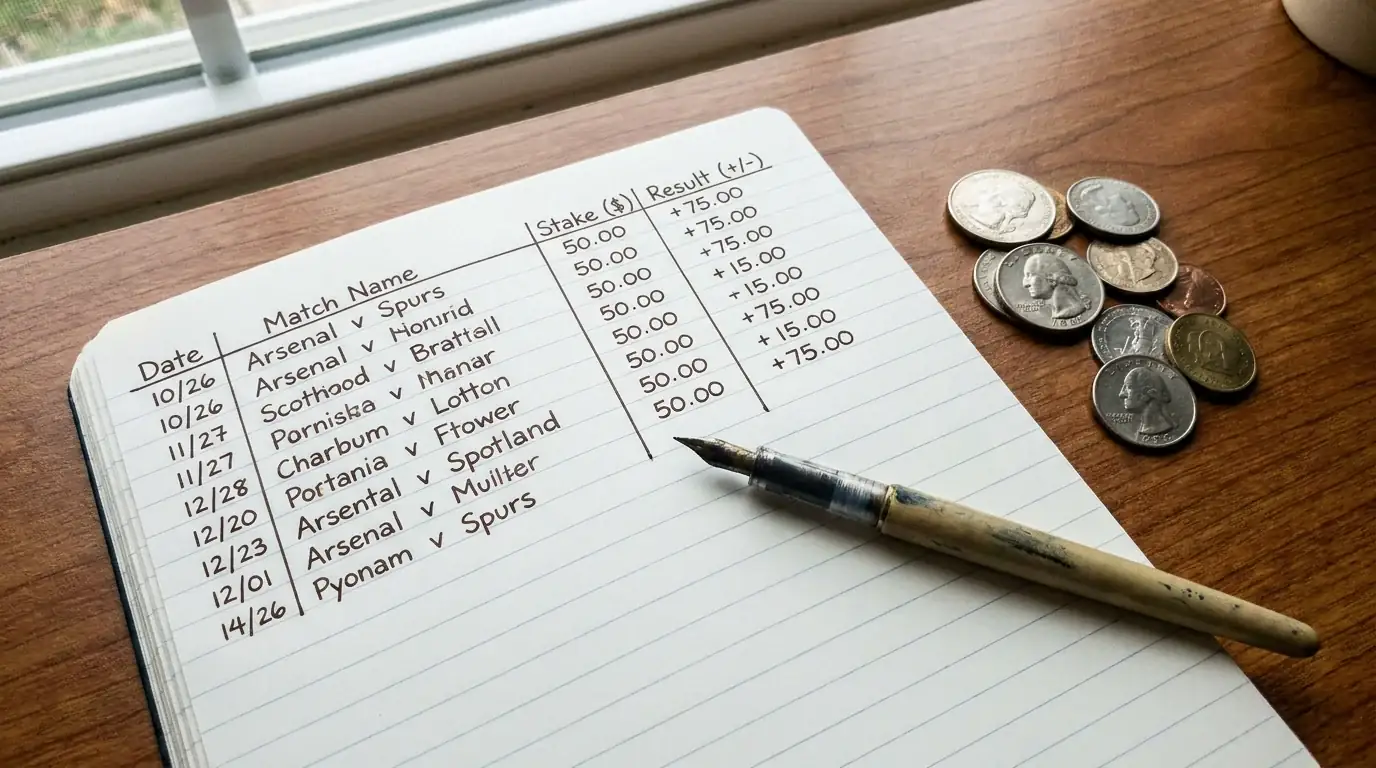
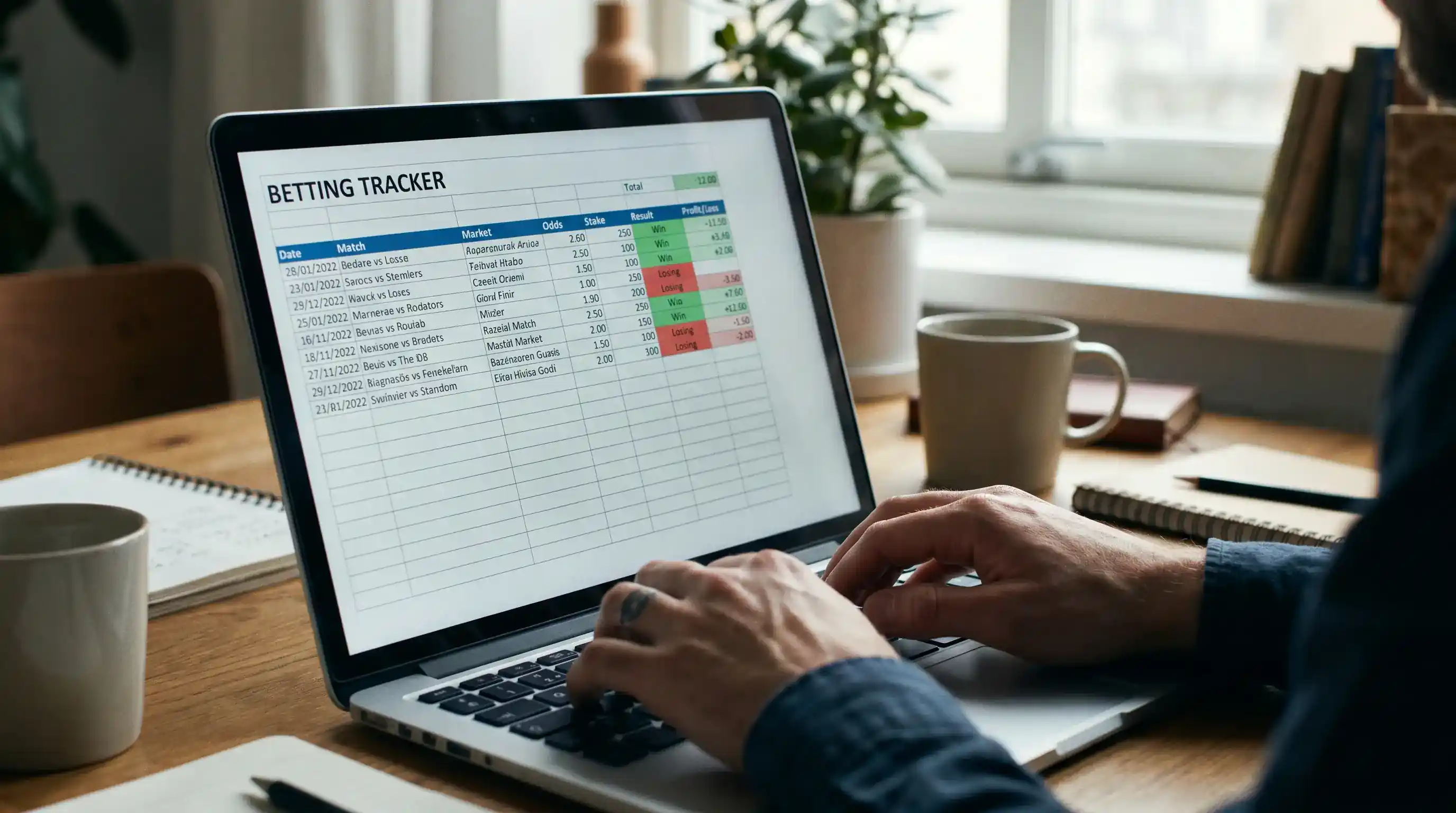
Track every bet. A simple spreadsheet with the date, match, market, odds, stake, result and profit/loss column gives you data to learn from. After 50 bets you’ll start seeing patterns — maybe you’re good at assessing BTTS markets but terrible at correct scores, or you consistently pick value in Championship matches but lose on the Premier League. Without records, you’re guessing. With records, you’re improving.
Football betting is accessible precisely because it’s simple to start. The risk is that simplicity masks complexity — the odds, the margins, the psychological traps of chasing losses or betting on impulse. Give yourself the structure of limits and records from day one, and you’ll be better placed than the majority of punters who start without either.
What is the minimum amount I can bet on football in the UK?
Most UK bookmakers allow minimum stakes of £0.10 to £0.50 depending on the market and the platform. Some operators set higher minimums on certain bet types. The low entry point makes it accessible for beginners, but remember that bankroll discipline matters regardless of stake size.
Do I need to verify my identity before placing a bet?
Yes. All UKGC-licensed bookmakers are required to verify your identity before allowing you to deposit and bet. This typically happens automatically during registration using database checks. If automatic verification fails, you will be asked to upload photo ID or proof of address, which usually resolves within hours.
Created by the ”Football Betting Sites” editorial team.