Betfair Football Exchange: How Lay Betting and Commission Compare to Traditional Bookmakers
 Available in US

The first time I placed a lay bet on the Betfair Exchange, it felt like stepping behind the counter. I was no longer just the punter — I was the bookmaker on that selection, taking someone else’s stake and paying out if they won. That shift in perspective changed how I thought about football betting entirely. The exchange model is fundamentally different from the traditional sportsbook, and for certain types of football bets, it offers something no conventional bookmaker can match: zero overround on the market itself, with the operator’s cut coming from commission rather than price manipulation.
Back, Lay and the Peer-to-Peer Model
A traditional bookmaker sets the odds and takes the opposite side of every bet. The exchange eliminates the middleman. On Betfair’s football markets, every bet is matched between two users: one backing an outcome (betting it will happen) and one laying it (betting it won’t).
Backing on an exchange works exactly like betting with a bookmaker. You select an outcome, choose your stake and accept the available odds. The difference is that those odds were set by another user offering to lay that outcome, not by a pricing algorithm employed by the operator. If you want to back Arsenal to beat Chelsea at 2.40, you need someone else willing to risk their money on Arsenal not winning at that price.
Laying is the reverse. When you lay Arsenal at 2.40, you’re accepting a £10 back bet from another user. If Arsenal lose or the match draws, you keep their £10 stake. If Arsenal win, you pay out £14 (the £10 stake multiplied by the odds minus one). Your liability is £14 — the potential payout minus the stake you keep. Lay betting is how exchange users trade positions, hedge existing bets, or take a view against an outcome without needing to back the alternative.
Flutter Entertainment, the parent company of Betfair, generated $16.38 billion in revenue across 2025, serving 15.9 million monthly active players globally. The exchange is a fraction of that business by revenue, but it remains the purest form of peer-to-peer betting available to UK football punters.

Commission: What You Pay and How to Reduce It
Betfair doesn’t profit from the odds. It profits from commission — a percentage cut of your net winnings on each market. The standard rate is 5% of profit. If you back a team and win £100, Betfair takes £5 and you receive £95. If you lose, you pay nothing to Betfair beyond your lost stake.
That 5% rate isn’t fixed. Betfair runs a points-based discount system where higher activity levels earn a lower commission rate, potentially dropping to 2% for the most active traders. Some promotional periods temporarily reduce commission further. Over a season of regular football exchange betting, the difference between 5% and 3% commission is substantial — on £10,000 of winning bets, you save £200.
The commission structure changes the calculus compared to bookmaker margins. At a traditional sportsbook, the margin is embedded in every bet — winners and losers alike pay a price that’s shaded against them. On the exchange, you pay commission only when you win. This means that on losing bets, the exchange is genuinely free. Over a long series of bets, the effective cost depends on your strike rate: a bettor who wins 40% of their exchange bets pays commission on only 40% of their activity, while a bookmaker’s overround taxes every bet regardless of outcome.
Exchange Odds vs Sportsbook Odds on Premier League Matches
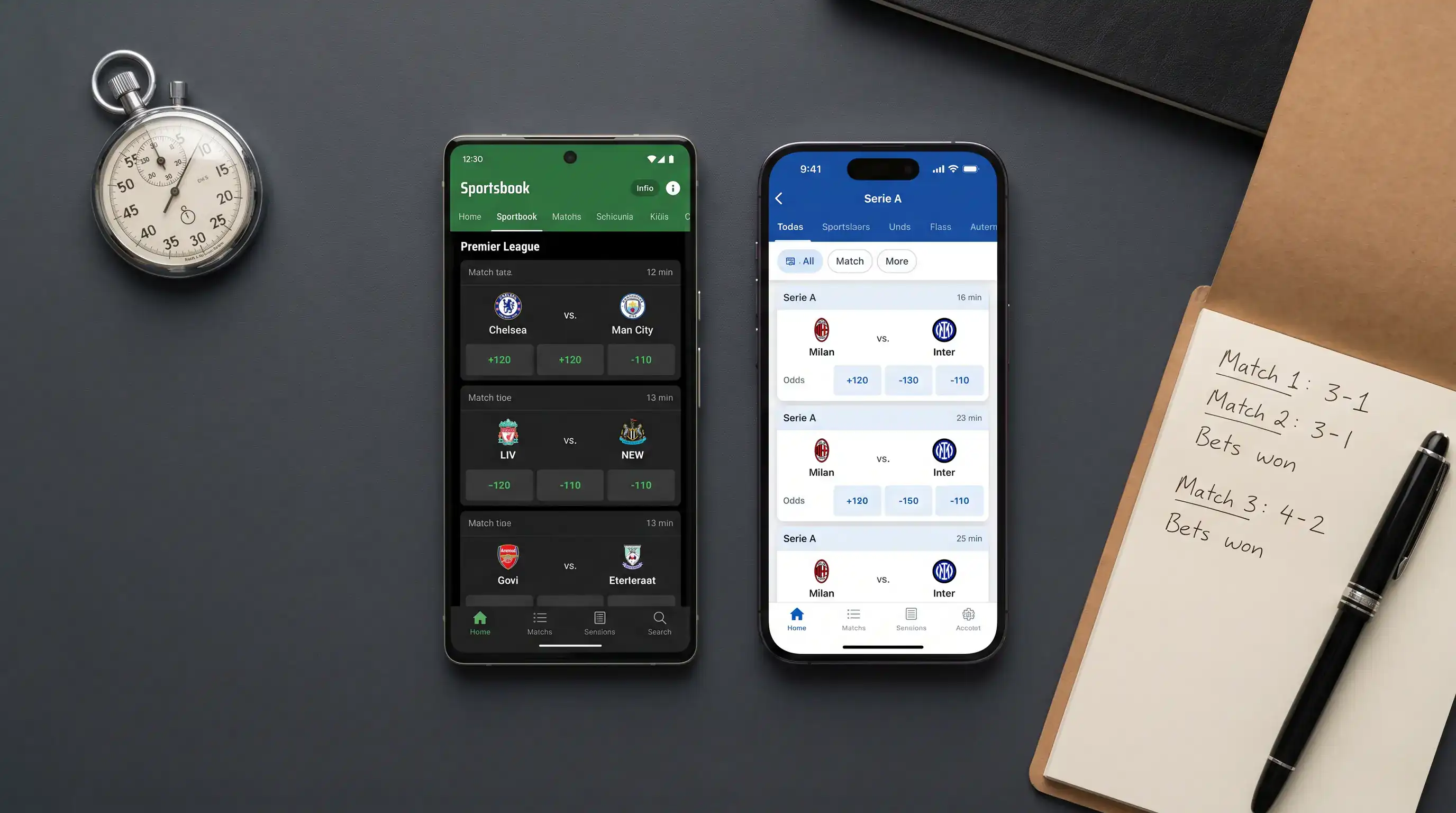
I compare exchange prices to sportsbook prices on every Premier League matchweek. The difference is consistent and measurable. On a typical 1X2 market, the combined implied probability on the exchange sits between 100.5% and 101.5% — that tiny surplus represents the gap between the best available back and lay prices. On a sportsbook, the same market carries an overround of 103-106%. The exchange market is tighter by 2-5 percentage points.
Football generated £1.3 billion in remote betting GGY in the year to March 2025. A significant chunk of that yield exists because sportsbook margins are wider than exchange margins. The exchange’s structural advantage is real, but it comes with caveats.
Liquidity is the main one. On a Saturday afternoon Premier League match, exchange liquidity is deep — tens of thousands of pounds available at the best prices on match-result markets. On a midweek League One fixture, liquidity thins dramatically. You might see a great exchange price on a lower-league match, but only £50 is available at that price. Try to place a £200 bet and you’ll be partially matched at worse prices, eroding the theoretical advantage. For high-profile football, the exchange consistently offers better odds. For lower-profile matches, the picture is murkier.
When the Exchange Genuinely Offers Better Value

The exchange is strongest in three scenarios. First, on high-liquidity matches where the tight overround translates directly into better prices with enough depth to fill your stake. Second, for lay betting — something you simply cannot do on a traditional sportsbook. If your analysis tells you a team is overvalued by the market, you can lay them directly rather than trying to construct an equivalent position by backing the draw and the away win separately. Third, for in-play trading, where the ability to back and lay at different points during a match lets you lock in a profit or cut a loss based on how events unfold.
Denise Coates, the founder of bet365, noted in a Companies House filing that the company made strategic decisions to cease operations in markets that no longer fell within a long-term sustainable revenue category. The exchange model, by contrast, is structurally agnostic to which side wins — Betfair earns commission regardless. This means exchange prices on football tend to be less influenced by liability management (where a bookmaker shortens a price because too many customers have backed one side) and more reflective of genuine market opinion.
The exchange isn’t better for everyone. If you’re placing small stakes on accumulators with free bet bonuses, a traditional sportsbook with promotional offers will deliver more recreational value. If you’re betting seriously on football — tracking margins, seeking the best price, managing positions across live matches — the exchange is a tool that no sportsbook can fully replicate. The two models serve different purposes, and the sharpest punters I know use both.

Can I use a bet builder on the Betfair Exchange?
No. Bet builders are a sportsbook product that relies on the operator pricing correlated selections. The exchange operates on peer-to-peer matching, so each market is priced independently. To combine selections on the exchange, you would need to back each one individually, which creates separate bets rather than a single combined wager.
Is laying a bet the same as betting against a team?
Essentially, yes. When you lay a team to win, you are betting that they will not win — meaning you profit if the match ends in a draw or an away victory. Your liability is the payout you would owe if the team does win. Laying is the mirror of backing and is the mechanism by which the exchange matches all bets between users.
Published by the Football Betting Sites team.